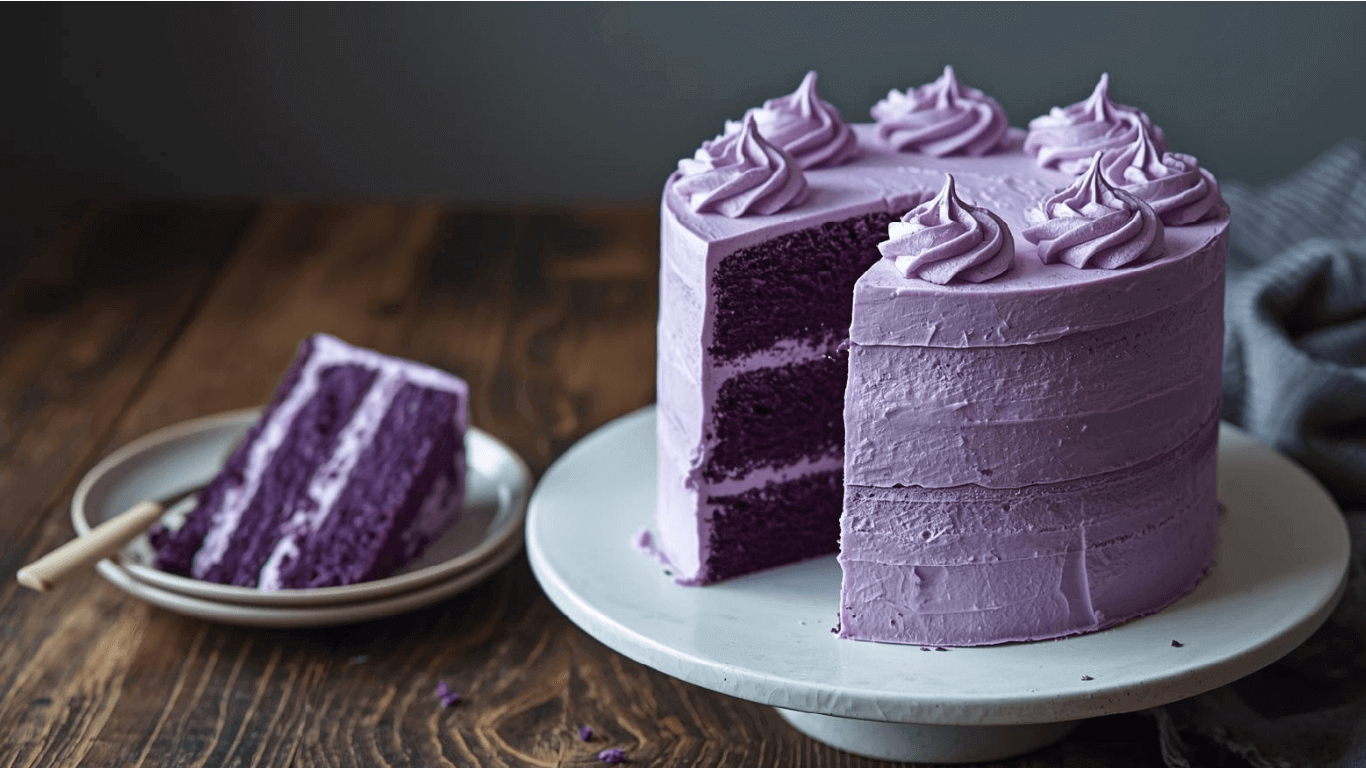
Did you know that visual cues influence a staggering 80% of our taste perception before we even take a bite? It challenges the old adage “don’t judge a book by its cover”—because when it comes to baking, we absolutely eat with our eyes first. If you are looking to arrest attention at your next gathering, a vibrant Purple Cake is your secret weapon.
While chocolate and vanilla are timeless classics, a Purple Cake offers a whimsical disruption to the dessert table, evoking feelings of luxury, creativity, and mystery. Whether you are aiming for a soft lavender hue for a bridal shower or a deep, electric violet for a birthday bash, achieving that perfect shade without compromising texture is a science.
In this guide, we aren’t just making a cake; we are engineering an edible masterpiece. We will walk through the specific hydration ratios needed when using food gels versus natural extracts (like Ube), ensuring your crumb remains tender and your color stays vivid. Let’s dive into the art of the perfect purple layer cake.

Ingredients List
To create a Purple Cake that tastes as spectacular as it looks, precision is key. We are using a reverse-creaming method base to ensure a velvety, flat-topped cake perfect for stacking.
Dry Ingredients:
- Cake Flour (3 cups / 360g): The lower protein content is non-negotiable for that melt-in-your-mouth texture. Substitution: If you only have all-purpose flour, remove 6 tablespoons and replace them with cornstarch.
- Granulated Sugar (1 ¾ cups / 350g): Provides structure and moisture.
- Baking Powder (1 tbsp) & Baking Soda (½ tsp): For that essential lift.
- Fine Sea Salt (1 tsp): To balance the sweetness.
Wet Ingredients:
- Unsalted Butter (1 cup / 226g): Room temperature. This is crucial for emulsion.
- Egg Whites (5 large): Using whites only keeps the batter pale, allowing the purple color to pop without fighting against the yellow yolk.
- Sour Cream (½ cup / 120g): Full fat. This adds tang and ensures the cake stays moist for days.
- Whole Milk (1 cup / 240ml): Room temperature.
- Vanilla Bean Paste (2 tsp): For those lovely speckles and deep flavor.
- The “Purple” Factor:
- Option A (Visual): High-quality Violet Gel Food Coloring (water-based liquid drops will ruin your batter consistency).
- Option B (Flavor & Color): Ube Extract (Purple Yam flavoring) – 1 tsp. Note: This changes the flavor profile to nutty and vanilla-like.
For the Blackberry Buttercream:
- Unsalted Butter (2 cups): Softened.
- Powdered Sugar (6-7 cups).
- Blackberry Puree (¼ cup): Strained to remove seeds. This provides a natural purple tint and tart flavor.
- Heavy Cream (2 tbsp).

- EVERYDAY DURABILITY: This nonstick bakeware set features heavy gauge steel construction with rolled-rim bake pan edges d…
- LONG-LASTING NONSTICK: These non stick baking pans feature long-lasting, latte-colored nonstick inside and out to provid…
- COMFORT AND CONTROL: Silicone grips on the baking sheet handles offer plenty of solid, comfortable grasp, even with poth…
Discover your next baking masterpiece. Click for sweet inspiration!
Bluey Cake Ideas: How to Make a Simple Bandit Cake (The Ultimate Guide)
Princess Cake: 3 Things To Know Before You Start Baking
Banana Cake: How to Achieve Perfect Moistness in 5 Steps
Harry Potter Cake: A 4-Step Hedwig Owl Cake Guide
Timing
Baking is a game of patience, but efficient workflow can save you time. This recipe is optimized to get you out of the kitchen faster than traditional methods.
- Prep Time: 30 minutes
- Cook Time: 30–35 minutes
- Cooling Time: 60 minutes
- Decorating Time: 45 minutes
- Total Time: Approx. 2 hours 45 minutes
Data Insight: By utilizing the reverse creaming method (mixing fat into dry ingredients first), you cut the active mixing time by roughly 15% compared to the traditional creaming method, while significantly reducing the risk of over-mixing (tunneling).
Step-by-Step Instructions
Step 1: The “Sand” Method (Reverse Creaming)
Preheat your oven to 350°F (175°C). Grease three 8-inch cake pans and line the bottoms with parchment paper. In the bowl of a stand mixer fitted with a paddle attachment, combine the flour, sugar, baking powder, soda, and salt. Mix on low speed for 30 seconds. Add the softened butter one tablespoon at a time into the dry mix until it resembles coarse, moist sand. This coats the flour proteins in fat, inhibiting gluten formation for a tender Purple Cake.
Step 2: The Emulsion
In a separate jug, whisk together the egg whites, milk, sour cream, and vanilla. With the mixer on low, slowly pour in half of this liquid mixture. Increase speed to medium-high and beat for exactly 2 minutes to build structure. Scrape down the bowl. Add the remaining liquid and mix just until combined.
Step 3: Achieving the Perfect Hue
This is the “generative” moment where you control the aesthetic. Add your Violet Gel Food Coloring or Ube extract now.
- Tip: The color will darken slightly as it bakes. Aim for a shade slightly lighter than your desired end result.
- Technique: Fold the color in by hand with a spatula to avoid overworking the batter. If you want an ombré effect, divide the batter into three bowls and dye them light, medium, and dark purple.
Step 4: The Bake
Divide the batter evenly among the three pans (use a kitchen scale for precision—approx. 450g per pan). Bake for 30-35 minutes.
- The Test: The cakes are done when they pull slightly away from the edges and a toothpick inserted into the center comes out with a few moist crumbs, not wet batter.
- Cooling: Let them cool in the pans for 10 minutes, then turn out onto a wire rack to cool completely. Never frost a warm cake.
Step 5: The Crumb Coat & Frosting
Whip your butter for 5 minutes until pale. Gradually add powdered sugar and the blackberry puree.
- Assembly: Place one layer down, top with frosting. Repeat.
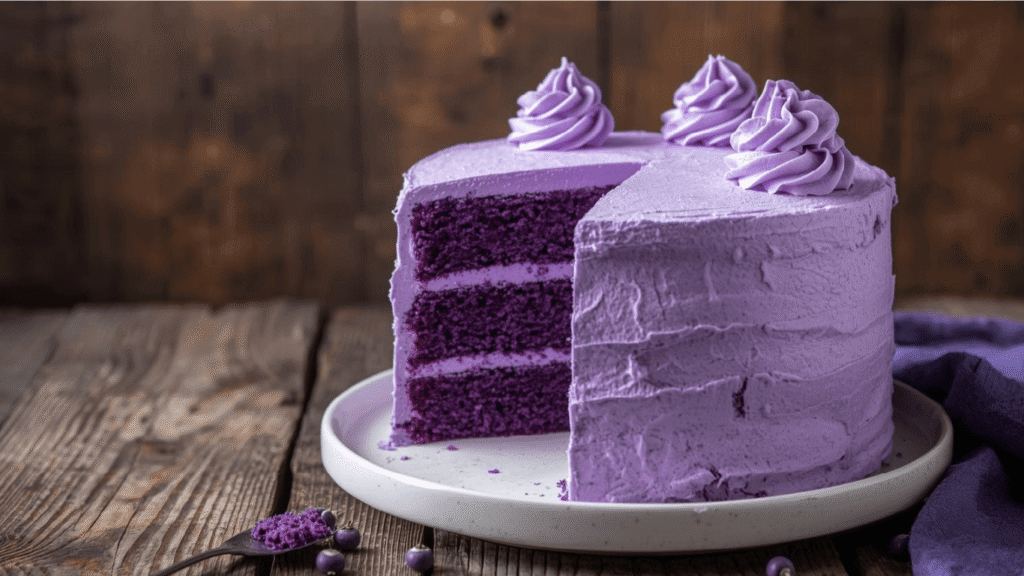
- The Seal: Apply a thin layer of frosting all over the cake (the crumb coat) and chill for 20 minutes. This locks in purple crumbs so your final outer layer is pristine. Apply the final thick layer of frosting and smooth with a bench scraper.
Nutritional Information
While this Purple Cake is a celebration treat, it is helpful to understand the nutritional breakdown per slice (based on 12 slices).
| Nutrient | Amount per Serving | % Daily Value* |
| Calories | 580 kcal | 29% |
| Total Fat | 28g | 36% |
| Saturated Fat | 17g | 85% |
| Carbohydrates | 78g | 28% |
| Sugars | 54g | – |
| Protein | 5g | 10% |
Percent Daily Values are based on a 2,000 calorie diet. Data estimates suggest high sugar content, classifying this as an occasional indulgence.
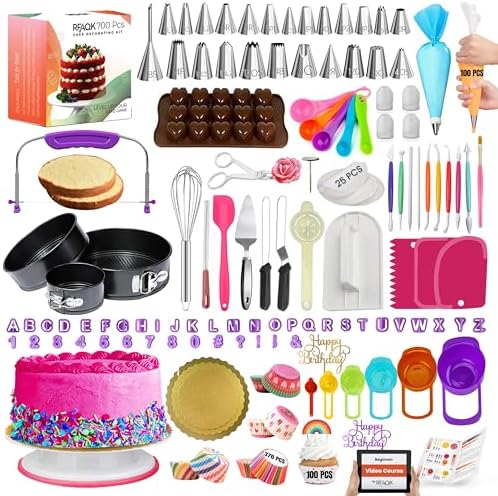
- ✅ Ultimate BAKING GIFT TOOLS: 700PCs is a great baking supplies gift set for baking and has everything for cake decorati…
- ✅ Incredible Cookie & Cake Decorating Kit! Unlock your cake decorating potential with this set of baking tools includes …
- ✅ EASY TO BAKE IN SPRINGFORM PANS: This Baking Pans Set simplifies cake baking in various sizes. Its non-stick surface a…
Healthier Alternatives for the Recipe
Customizing this recipe for dietary needs doesn’t mean sacrificing the stunning visual appeal.
- Natural Coloring Agents: If you are avoiding synthetic dyes, swap the gel coloring for Freeze-Dried Blueberry Powder or Butterfly Pea Flower Powder. These contain high levels of anthocyanins, the antioxidant pigments responsible for blue and purple hues in nature. Reacting butterfly pea flower with a dash of lemon juice creates a brilliant violet.
- Sugar Reduction: You can reduce the sugar in the cake batter by 15% (down to 300g) without compromising structure. For the frosting, consider a Swiss Meringue Buttercream, which typically uses less sugar than American Buttercream.
- Gluten-Free: Swap the cake flour for a high-quality 1:1 Gluten-Free Baking Flour blend containing xanthan gum. The sour cream in the recipe helps prevent the “grittiness” often associated with GF baking.
Serving Suggestions
To make your Purple Cake the star of the show, presentation is everything.
- Monochromatic Magic: Top the cake with fresh blackberries, edible purple pansies, or candied violets. The contrast of natural textures against the smooth buttercream is visually striking.
- The Drink Pairing: Serve with a cup of Earl Grey tea. The bergamot oil in the tea creates a sophisticated flavor bridge with the vanilla or blackberry notes in the cake. For evening events, a glass of Prosecco or a sparkling Rosé cuts through the richness of the buttercream.
- Texture Contrast: Add a crunch element between the layers, such as crushed meringue or white chocolate crisp pearls, to surprise the palate.
Common Mistakes to Avoid
Even seasoned bakers can stumble. Here are the data-driven pitfalls to watch out for:
- Using Liquid Food Coloring:
- The Issue: Standard grocery store liquid drops contain too much water.
- The Result: To get a deep purple, you have to add so much liquid that you throw off the wet-dry ratio, resulting in a dense, rubbery cake. Always use gel paste.
- Ingredients Temperature:
- The Insight: Cold eggs and butter do not emulsify. If your batter looks curdled (lumpy), your ingredients were likely too cold. This breaks the suspension of fat and liquid, leading to an uneven bake.
- Over-baking the Purple:
- The Issue: Purple batter can turn an unappetizing grey-brown if the exterior caramelizes too much.
- The Fix: Wrap your cake pans in “cake strips” (damp fabric strips) to insulate the edges and keep the temperature even, preserving the vibrant color.
Storing Tips for the Recipe
Preserving the moisture of your layer cake is essential.
- Room Temperature: An uncut, frosted cake can sit at cool room temperature (below 75°F) for up to 3 days in a cake keeper. The sugar and fat act as preservatives.
- Refrigerator: Once cut, the exposed cake will dry out. Press plastic wrap directly against the cut section and store in the fridge for up to 5 days. Bring to room temperature before eating—cold buttercream has a waxy mouthfeel.
- Freezing: This recipe freezes beautifully. Wrap individual slices tight in plastic wrap, then foil. They will keep for up to 3 months. Data suggests that freezing the cake layers before frosting makes them easier to handle and actually locks in moisture.
Conclusion
This Purple Cake is more than just a dessert; it’s a centerpiece that combines visual drama with culinary science. By following the reverse creaming method and using the right coloring agents, you ensure a moist, tender crumb and a show-stopping violet hue. Whether for a birthday or a creative weekend project, this recipe delivers on both taste and aesthetics.
Ready to bake? Don’t forget to snap a photo of your creation! Leave a comment below with your results, rate the recipe, and subscribe to our newsletter for more colorful baking science delivered straight to your inbox.
- Reinforced die-cast aluminum construction ensures long-term durability and reliability while maintaining a lightweight d…
- A top-level, harder granite material featuring 10x ultra non-stick performance to make your daily cooking safer and heal…
- Recommend to hand wash the cookware as it is effortless to clean. Wipe it with a paper towel or rinse it with water.
FAQs
Q: Can I use this recipe to make cupcakes?
A: Absolutely. This batter will yield approximately 24 standard cupcakes. Reduce the baking time to 18–22 minutes.
Q: Why did my purple cake turn green?
A: This is a fascinating chemical reaction! The anthocyanins in some natural dyes (and even some artificial ones) react with the baking soda (an alkaline). If your purple turns teal or green, your batter was too basic. Using a high-quality synthetic gel usually prevents this, or ensuring you use acidic ingredients like sour cream helps balance the pH.
Q: What flavor pairs best with purple cake?
A: Visually, people expect fruit flavors with purple. Blackberry, blueberry, lemon, and coconut are the top semantic flavor pairings that complement the vanilla base perfectly.
Q: Can I make the cake layers ahead of time?
A: Yes. In fact, professional bakers often bake layers 2 days in advance. Wrap them in plastic wrap while they are slightly warm (this steam-seals them) and freeze them. Frost them while frozen for sharpest edges.
Your feedback helps other cooks succeed. Rate this recipe!
Good, But Adjustments Needed
This is a solid cake recipe with a few pros and cons. Pro: It’s very moist and has a great structure for layering. Con: The color instructions are vague. “Amount varies” had me guessing, and I almost overdid it. A suggested starting point (like “1/4 tsp”) would help. Also, the total time doesn’t factor in making the frosting, which added another 15 minutes for me. The final Purple Cake was beautiful and delicious, but as an intermediate baker, I needed to rely on my own experience to navigate a couple of the steps. Beginners might find those parts a bit challenging.
Perfect for a Special Occasion
I made this for a charity bake sale, and it sold in minutes! Everyone was drawn to the stunning color. This Purple Cake is definitely a project, not a quick weeknight bake, but it’s perfect when you want to make something impressive. The layers came out perfectly level, and the frosting was easy to work with for a smooth finish. I added a bit of lemon zest to the frosting to cut the sweetness, which I’d recommend. It’s a reliable, professional-looking recipe that delivers on both looks and taste.
Great Flavor, Tricky Color
The flavor and texture of this Purple Cake recipe are fantastic—it’s a delicious, dense vanilla cake that holds up well. The crumb is tender and it stayed moist for days. My issue was with the color. I used liquid food coloring because it’s what I had, and my cake turned out a grayish-lavender instead of a royal purple. It tasted wonderful, but wasn’t the vibrant centerpiece I envisioned. Lesson learned: you really do need gel coloring. The instructions were clear, and the total time estimate was accurate, including cooling.