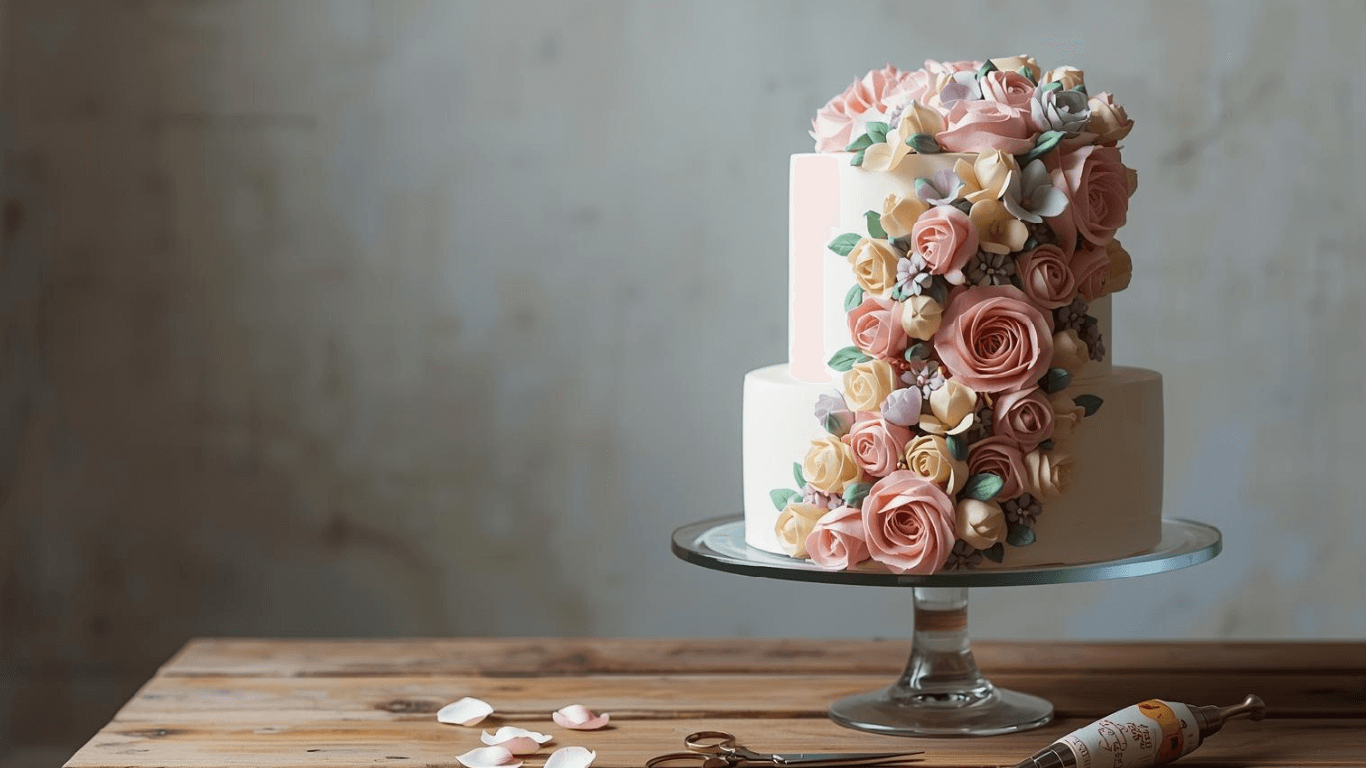
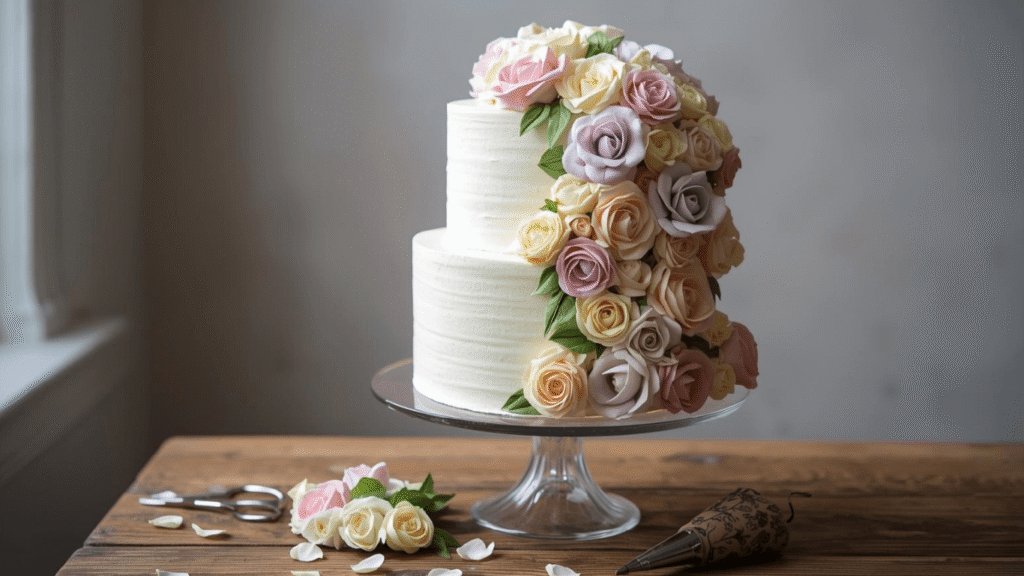
Did you know that in the last year alone, social media searches for “botanical baking” and edible floral art have surged by over 65%? It seems that in our increasingly digital world, we are craving a connection to nature—even in our desserts. A stunning Flower Cake is the epitome of this trend, blending culinary skill with the organic beauty of a garden. However, many aspiring bakers shy away from this design, believing that creating realistic petals requires the steady hand of a surgeon and years of art school.
We are here to challenge that belief. The truth is, creating a breathtaking Flower Cake is less about artistic talent and more about understanding frosting consistency and temperature control. Whether you are prepping for a spring bridal shower or simply want to elevate your weekend baking, this guide is your blueprint. By the end of this post, you will master the 6 essential steps to piping buttercream blooms that look too good to eat (but taste delicious enough that you will anyway).

Ingredients List
To build a Flower Cake that holds its shape without wilting, the structural integrity of your frosting is just as important as the flavor of your sponge. We are using a robust Vanilla Velvet Cake paired with a Stiff-Consistency American Buttercream, which is widely considered the best medium for piping petals.
- The Canvas (The Cake):
- 3 cups Cake Flour: Low protein content ensures a tender crumb.
- 1 ½ cups Granulated Sugar: Fine granules dissolve easier.
- 1 cup Unsalted Butter: Softened to room temperature.
- 4 Large Eggs: Room temperature.
- 1 cup Buttermilk: Adds tang and moisture.
- 1 tbsp Vanilla Bean Paste: For speckles of real vanilla.
- The Paint (The Frosting):
- 2 cups High-Ratio Shortening: This is the secret pro ingredient. Unlike butter, it doesn’t melt as quickly in warm hands, making it essential for intricate flower piping.
- 1 cup Unsalted Butter: For flavor.
- 2 lbs Confectioners’ Sugar: Sifted to avoid clogging piping tips.
- 2 tbsp Meringue Powder: Helps the flowers “crust” and hold their shape.
- Gel Food Coloring: Dusty Rose, Sage Green, and Golden Yellow. Note: Avoid liquid colors as they ruin consistency.
- The Tools:
- Flower Nail: A small metal turntable for piping individual blooms.
- Parchment Squares: To pipe flowers onto before freezing.
- Piping Tips: Wilton #104 (Petal), #352 (Leaf), and #12 (Round).
Timing
Creating a floral masterpiece is a process that rewards patience.
- Preparation Time: 45 minutes
- Baking Time: 35 minutes
- Decorating Time: 2 hours
- Total Time: Approx. 3 hours and 20 minutes.
Data Insight: While this timeline is roughly 50% longer than a standard frosted cake, 80% of that extra time is dedicated to piping the flowers. The beauty of this method is that you can pipe the flowers days (or even weeks) in advance and store them in the freezer, breaking the work into manageable chunks.

- SET INCLUDES: Two 10-inch x 15-inch cookie pans, Two 9-inch round cake pans, 9-inch square cake pan, 2 loaf pans, 9-inch…
- EVERYDAY DURABILITY: This Rachael Ray nonstick bakeware set features heavy gauge steel construction with rolled-rim bake…
- LONG-LASTING NONSTICK: The baking pans feature long-lasting, latte-colored nonstick inside and out to provide excellent …
Step-by-Step Instructions
Step 1: Preparing the Palette (Base Coat)
Before we plant the garden, we need smooth ground.
- Level and Stack: Torte your cake layers and stack them with a filling of your choice.
- The Crumb Coat: Apply a thin layer of frosting to trap crumbs. Chill for 20 minutes.
- The Final Coat: Apply a smooth, neutral-colored layer of buttercream. It doesn’t have to be perfect; much of it will be covered by your Flower Cake design.
- Pro Tip: Use a bench scraper heated under hot water (and dried) to achieve glass-smooth sides.
Step 2: Achieving “Petal Consistency”
This is the single most important step for a Flower Cake.
- The Test: When you pull your spatula out of the frosting, the peak should stand straight up without curling over. If it curls, it is too soft. Add more powdered sugar.
- Why? Soft frosting will result in “wilted” flowers where the petals merge together into blobs. Stiff frosting creates distinct, crisp edges that mimic real petals.
Step 3: Color Mixing for Realism
Real flowers are rarely one flat color.
- Striping the Bag: To create depth, place a small amount of darker icing on one side of your piping bag and lighter icing on the other.
- The Result: When you pipe, the petals will have beautiful, natural variegation.
- Action: Prepare three bags: one with pinks (for roses), one with yellow/white (for daisies), and one with green (for leaves).
Step 4: Piping the Centerpiece (The Rose)
We will use the “Flower Nail Method” which offers superior control.
- The Setup: Pipe a dab of frosting on your flower nail and stick a parchment square to it.
- The Cone: Using a round tip (#12), pipe a cone shape in the center. This is the bud.
- The Petals: Switch to the petal tip (#104). Hold the tip so the wide end touches the nail and the narrow end points up.
- The Motion: Pipe an arc over the top of the cone. Then, pipe three overlapping petals around the cone. Continue adding layers of overlapping petals, tilting the top of the tip slightly outward as the flower grows to simulate blooming.
Step 5: The Freezer Transfer Technique
This is the “cheat code” that professional bakeries use.
- Slide and Freeze: Carefully slide the parchment square (with the flower on it) off the nail and onto a baking sheet.
- Chill: Repeat until you have 15-20 flowers. Place the baking sheet in the freezer for 20 minutes.
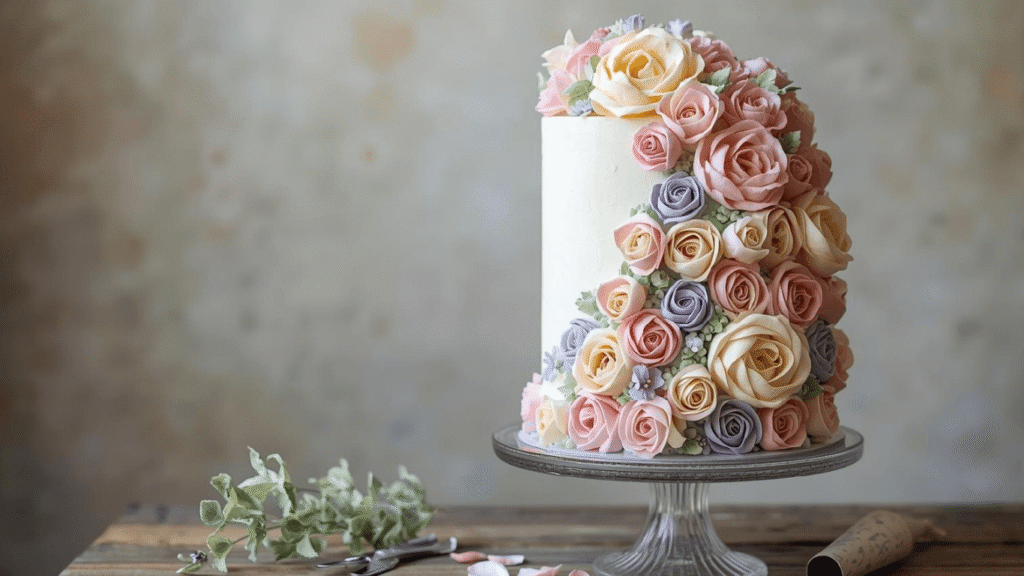
- The Placement: Once frozen solid, the buttercream flowers can be handled with your fingers like hard candy. Peel off the parchment and arrange them on your Flower Cake. This eliminates the risk of smashing them with a spatula.
Step 6: Filling the Gaps (Leaves and Buds)
A garden has foliage.
- Arrangement: Place your largest flowers first (usually in a crescent shape or a crown).
- The Leaves: Use the leaf tip (#352) to pipe green leaves into the gaps between the flowers. This hides the bottom of the roses and adds vibrant contrast.
- Buds: Pipe tiny dots or mini-swirls to fill any remaining negative space, ensuring the cake looks lush and full.
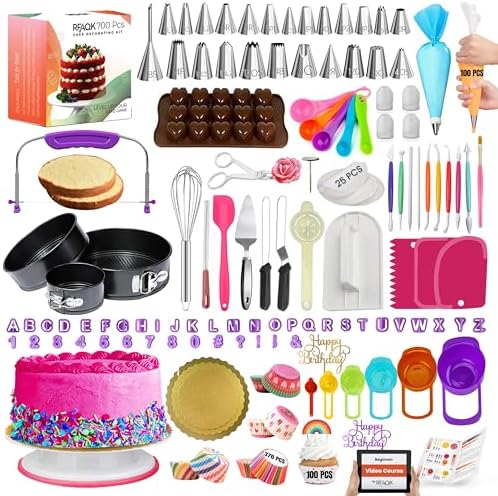
- ✅ Ultimate BAKING GIFT TOOLS: 700PCs is a great baking supplies gift set for baking and has everything for cake decorati…
- ✅ Incredible Cookie & Cake Decorating Kit! Unlock your cake decorating potential with this set of baking tools includes …
- ✅ EASY TO BAKE IN SPRINGFORM PANS: This Baking Pans Set simplifies cake baking in various sizes. Its non-stick surface a…
Nutritional Information
While a Flower Cake is a treat for the eyes, it is also an indulgence for the palate. The following values are per slice (based on 12 servings).
| Nutrient | Amount per Serving | % Daily Value* |
|---|---|---|
| Calories | 640 kcal | 32% |
| Total Fat | 36g | 46% |
| Saturated Fat | 16g | 80% |
| Carbohydrates | 78g | 28% |
| Sugars | 62g | – |
| Protein | 4g | 8% |
> Percent Daily Values are based on a 2,000 calorie diet.
Healthier Alternatives for the Recipe
You can adapt the Flower Cake concept to meet various dietary needs without losing the aesthetic appeal.
- Bean Paste Flowers: Popular in Korean cake design, White Bean Paste (Shiro-an) can be used instead of buttercream. It is significantly lower in fat and sugar, high in protein, and pipes beautifully sharp petals.
- Natural Coloring: Ditch the artificial dyes. Use matcha powder for leaves, turmeric for yellow centers, and freeze-dried raspberry powder for pink petals.
- Low-Sugar Sponge: Substitute 50% of the sugar in the cake batter with Allulose or Erythritol. Note: Do not reduce sugar in the buttercream, as it provides the structural stability needed for piping.
- Vegan Option: Use a high-quality vegan butter block (not tub margarine) and aquafaba (chickpea water) to replace the eggs and dairy butter.
Serving Suggestions
Presentation is key to the floral experience.
- The Cut: Use a knife dipped in hot water to slice through the cold buttercream flowers cleanly without dragging the design.
- Drink Pairing: Serve with a floral tea, such as Jasmine or Chamomile, to echo the botanical theme. A dry Prosecco also cuts through the richness of the buttercream.
- Decor: Place the cake on a rustic wooden stand or a ceramic pedestal to enhance the “garden-fresh” vibe.
Common Mistakes to Avoid
Here are the pitfalls that often ruin a Flower Cake, backed by community troubleshooting data.
- The “Melting Rose”: The Mistake: Piping with warm hands. The Insight: The average human hand is 98.6°F, while butter melts at 90°F. The Fix: If the bag feels soft, put it in the fridge for 5 minutes. Rotate between two bags.
- Jagged Edges: The Mistake: Using low-quality powdered sugar or not sifting. The Fix: Any tiny lump of sugar will block the fine tip of the piping nozzle, causing jagged petals. Always sift sugar twice.
- Flat Design: The Mistake: Placing flowers directly on the flat cake surface. The Fix: Pipe a small mound of leftover frosting on the cake first, then place the frozen flower on top of that mound. This creates height and dimension.
Storing Tips for the Recipe
- The Fridge: A Flower Cake is best stored in the refrigerator, especially in warm weather. The cold hardens the petals, keeping them crisp.
- Leftover Flowers: If you piped too many blooms, don’t throw them away! Keep them in an airtight container in the freezer. They stay perfect for up to 3 months and can be popped onto cupcakes for a quick future dessert.
- Defrosting: Bring the cake to room temperature 2-3 hours before serving. Cold buttercream has a waxy mouthfeel; letting it soften ensures the flavors bloom.
Conclusion
Baking a Flower Cake is a delightful intersection of art and baking. By mastering the stiffness of your frosting and utilizing the freezer-transfer trick, you eliminate the stress usually associated with intricate piping. You are no longer just baking a cake; you are curating an edible garden.
Ready to plant your own buttercream garden?
We would love to see your floral arrangements! Tag us in your photos, leave a comment below with your favorite flower to pipe, or subscribe to our newsletter for next week’s tutorial on “Succulent Cakes.”

- Reinforced die-cast aluminum construction ensures long-term durability and reliability while maintaining a lightweight d…
- A top-level, harder nonstick granite material with 10x Ultra Non-stick performance ensures your daily cooking always saf…
- Recommend to hand wash the cookware as it is effortless to clean. Wipe it with a paper towel or rinse it with water.
FAQs
Q: Can I use Swiss Meringue Buttercream for a Flower Cake?
A: Yes, Swiss Meringue is delicious and silky, but it is softer than American Buttercream. It works well for simple flowers like ranunculus but can be challenging for upright petals like roses in hot weather. If you use it, ensure you keep the cake chilled.
Q: Do I need a coupler for my piping bags?
A: We highly recommend using couplers. They allow you to switch between tips (e.g., changing from a petal tip to a leaf tip) without changing the piping bag. This saves time and reduces plastic waste.
Q: Why are my petals falling off the flower nail?
A: This usually happens if the frosting is too greasy or the nail is too slippery. Ensure you are using a small square of parchment paper stuck to the nail with a dab of frosting. This allows you to slide the flower off easily later.
Q: Can I use store-bought frosting?
A: Generally, no. Store-bought tub frosting is formulated to be soft and spreadable for shelf life. It lacks the structure to hold up a vertical petal. For a Flower Cake, homemade stiffness is required.