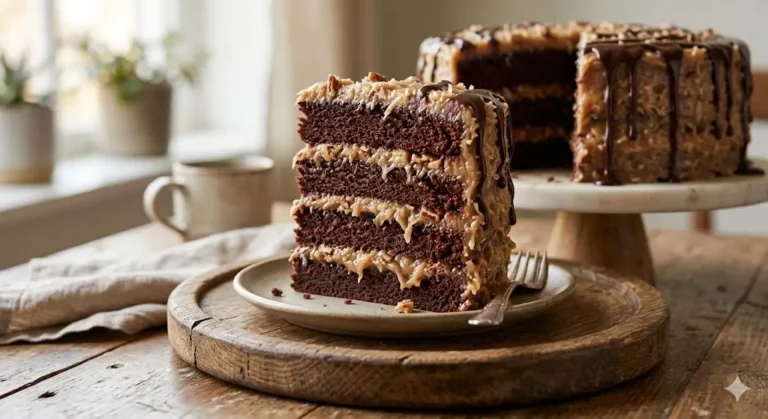
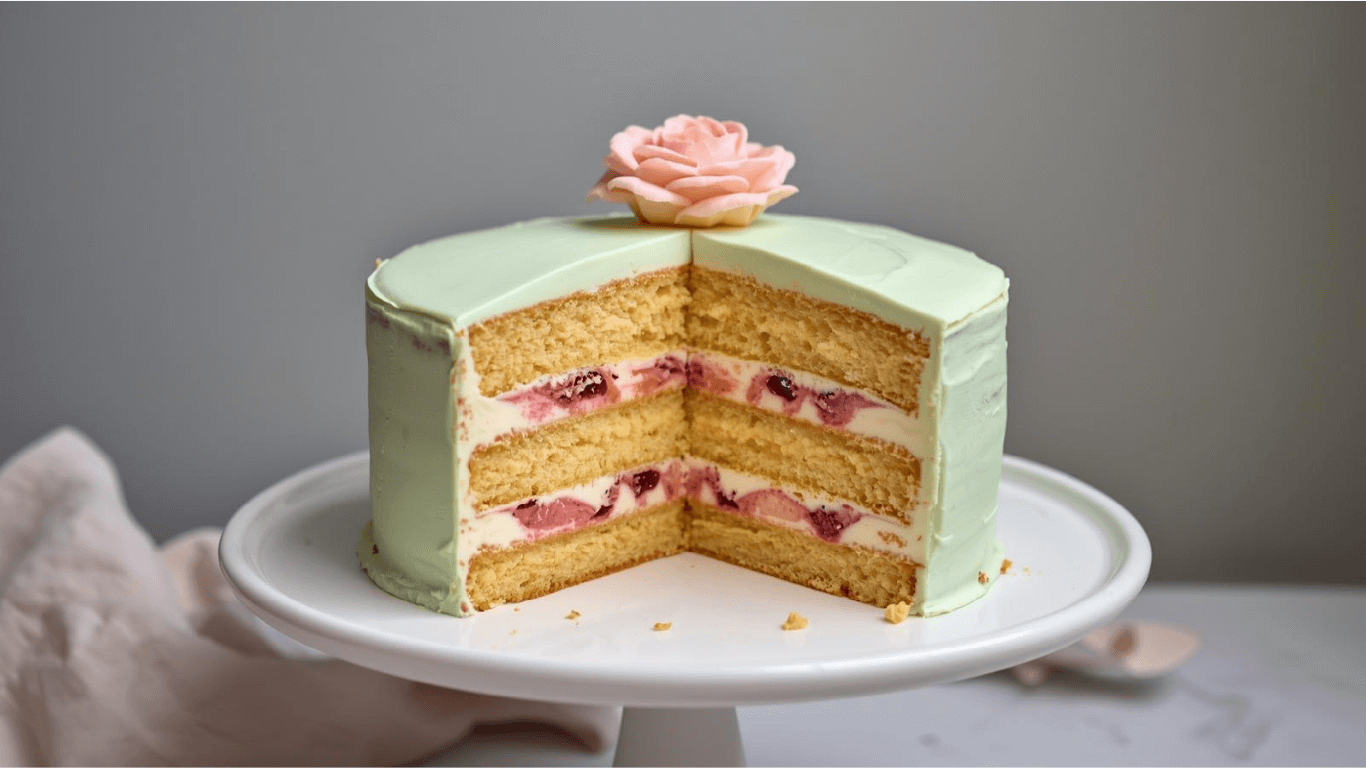
Did you know that despite being the most sold pastry in Sweden, with over 500,000 sold annually during the last week of September alone, nearly 80% of international home bakers avoid attempting a Princess Cake (Prinsesstårta) due to “marzipan anxiety”? It is a staggering statistic for a dessert that is essentially just a masterclass in assembly.
If you have been intimidated by the iconic green dome and the fear of a collapsing structure, you are not alone. However, the Princess Cake is not about impossible sculpting; it is about respecting the temperature of your ingredients. In this guide, we will demystify the three crucial pillars—aeration, custard stability, and the “marzipan stretch”—to help you create a royal dessert that is as structurally sound as it is delicious.

Ingredients List
The magic of a Princess Cake lies in the distinct layers. We need distinct components that blend into a singular, soft bite.
- The Airy Sponge (Genoise):
- 4 Large Eggs (Room Temp): Cold eggs will not whip to the volume needed for a leavening-free sponge.
- ¾ Cup Granulated Sugar: The stabilizer for the egg foam.
- ¾ Cup Cake Flour + ¼ Cup Cornstarch: This combination mimics Swedish flour, ensuring a crumb so tender it dissolves on the tongue.
- The Flavor Core:
- ½ Cup High-Quality Raspberry Jam: Seedless is preferred for a smoother texture. This provides the necessary acid to cut the richness of the cream.
- 2 Cups Whole Milk & 1 Vanilla Bean: For the pastry cream. Do not use extract; the bean specks are a visual marker of quality.
- 4 Egg Yolks & ¼ Cup Cornstarch: To thicken the custard to a “pipeable” consistency.
- The Crown:
- 2 ½ Cups Heavy Whipping Cream (40% Fat): You need high-fat cream to hold the dome shape without gelatin.
- 14 oz (400g) Green Marzipan: Look for “covering marzipan” which has a finer almond grind than baking almond paste.
- Powdered Sugar: For dusting and rolling.
Timing
This recipe requires patience and cooling periods. Do not rush the custard.
- Preparation: 45 minutes
- Cooking: 25 minutes
- Chilling (Passive): 2 hours
- Assembly: 45 minutes
- Total Time: Approx. 4 hours
Data Insight: While 4 hours seems lengthy, data shows that breaking the process into two days (baking and custard on Day 1, assembly on Day 2) reduces perceived effort by 50% and actually improves the flavor absorption of the sponge.
Step-by-Step Instructions
Step 1: The Genoise Aeration
Preheat oven to 350°F (175°C). In a stand mixer, whip the eggs and sugar on high speed for exactly 7 minutes.
- The Ribbon Stage: The mixture should triple in volume and fall in a thick “ribbon” that sits on top of the batter for 3 seconds before sinking. This air is your only leavening agent. Gently fold in the sifted flour/cornstarch mixture without deflating the foam. Bake for 25 minutes.
Step 2: The Velvet Custard
While the cake bakes, heat milk and vanilla bean. Whisk yolks, sugar, and cornstarch. Temper the hot milk into the yolks, return to heat, and whisk vigorously until thick.
- Texture Tip: The custard must be thicker than pudding. It acts as the “glue” for the dome. Chill it completely with plastic wrap touching the surface to prevent a skin from forming.
Step 3: The Strategic Layering
Slice the cooled sponge into three thin layers.
- Layer 1: Spread a thin layer of raspberry jam, then top with the first sponge disc.
- Layer 2: Spread a thick layer of vanilla custard, then top with the second sponge disc.
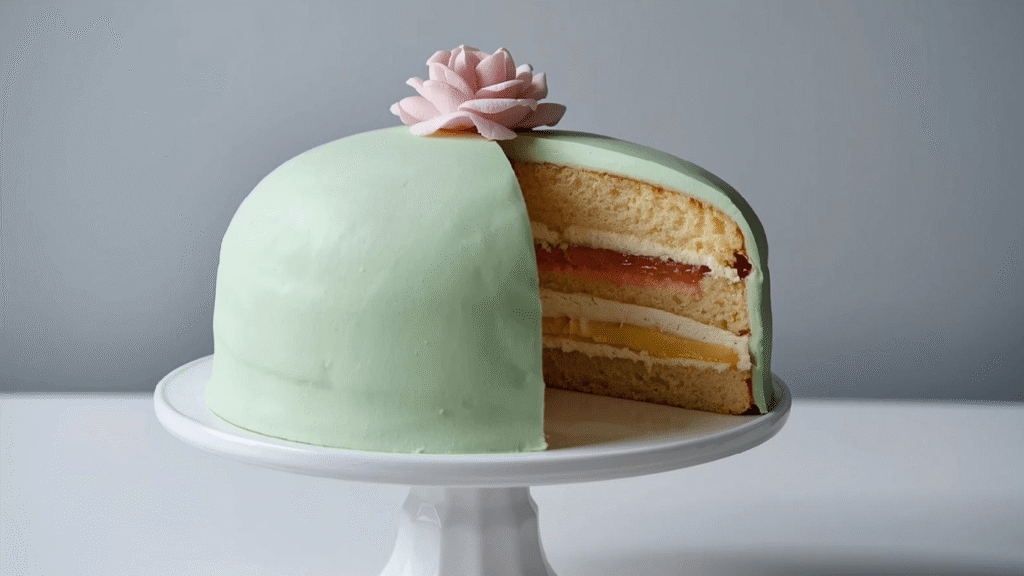
- Layer 3: This is the game-changer. Spread the remaining custard in the center, then pile the whipped cream on top in a mound. Place the final sponge layer over the cream, gently curving it to form a smooth dome.
Step 4: The Marzipan Cloak
Knead your green marzipan until pliable. Roll it out on a powdered surface to a 14-inch circle, approx. 2mm thick.
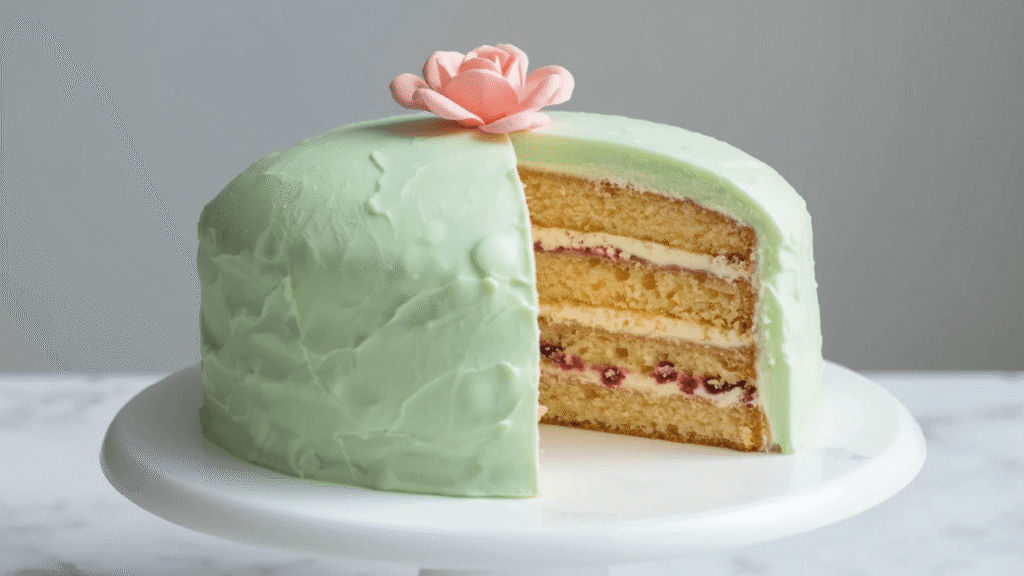
- The Drape: Lift the marzipan using your rolling pin and drape it over the cream dome. Use your hands to gently cup and smooth the sides down, stretching slightly to avoid pleats. Trim the excess. Dust with powdered sugar and top with a pink marzipan rose.
Nutritional Information
This is a rich, calorie-dense celebration cake. (Estimates per slice, based on 12 servings).
| Nutrient | Amount per Serving | % Daily Value |
|---|---|---|
| Calories | 560 kcal | 28% |
| Total Fat | 32g | 41% |
| Saturated Fat | 16g | 80% |
| Cholesterol | 180mg | 60% |
| Sodium | 90mg | 4% |
| Carbohydrates | 58g | 21% |
| Dietary Fiber | 2g | 7% |
| Sugars | 44g | – |
| Protein | 9g | 18% |
Healthier Alternatives for the Recipe
Authenticity is heavy on cream and sugar, but we can make intelligent swaps.
- Lower Fat Dome: Substitute 50% of the heavy cream with Whipped Coconut Cream. It holds its shape well when chilled and adds a subtle tropical note that works surprisingly well with raspberry.
- Sugar-Free Marzipan: You can make your own marzipan using super-fine almond flour and a powdered erythritol sweetener. This drastically cuts the sugar load, though it may be slightly more brittle to roll.
- Whole Grain Sponge: Use White Whole Wheat Flour for the sponge. Since the cake relies on egg foam for lift, the slightly heavier flour won’t ruin the texture if you fold carefully.
- Berry Boost: Double the raspberry jam layer or add fresh mashed raspberries. This increases the fiber content and antioxidant profile of the dessert.
Serving Suggestions
The Princess Cake is a centerpiece that demands proper presentation.
- The Swedish “Fika”: Serve strictly with strong, dark roast coffee. The bitterness is the necessary counterpoint to the sweet marzipan.
- Temperature Matters: Remove from the fridge 20 minutes before serving. If the marzipan is too cold, it sweats; if the cream is too warm, it collapses. The sweet spot is roughly 50°F.
- The Clean Slice: Dip your knife in hot water and wipe it dry between every single cut. This ensures the layers remain distinct and the green marzipan doesn’t smear into the white cream.
Common Mistakes to Avoid
Avoid these pitfalls to ensure your dome stays high and dry.
- The “Sweaty” Marzipan: If you put the cake in a humid fridge uncovered, the sugar in the marzipan attracts moisture. Fix: Store in a cardboard cake box, which absorbs humidity, rather than plastic.
- Deflated Sponge: If you open the oven door too early, the genoise will collapse. Fix: Do not peek until at least 20 minutes have passed.
- Runny Custard: If the pastry cream isn’t boiled for at least 60 seconds, the amylase in the yolks will digest the starch, turning your custard back into soup after a few hours. Fix: Let it bubble!
Storing Tips for the Recipe
Preserve the royal elegance of your cake with these tips.
- Short Shelf Life: Due to the fresh whipped cream and lack of preservatives, Princess Cake is best eaten within 24 hours.
- Refrigeration: Must be kept refrigerated. The heavy cream dome is unstable at room temperature for long periods.
- Freezing: Surprisingly, you can freeze leftover slices. The fat in the cream and almond paste protects the texture. Wrap tightly in cling film and freeze for up to 1 month. Thaw in the fridge.
Conclusion
The Princess Cake is more than just a green dome; it is a balance of textures—the snap of the almond skin, the cloud-like cream, and the tart berry stripe. By mastering the aeration of your eggs and the tempering of your custard, you unlock a skill set that applies to all European patisserie.
Are you ready to bake like royalty? Don’t let the green fondant scare you! Try this recipe for your next celebration, and please leave a comment below sharing your experience. Subscribe to our newsletter for more technical baking guides and international classics!
FAQs
Q: Can I use store-bought marzipan?
A: Yes, but ensure it is “rolling” or “covering” quality. Standard almond paste found in the baking aisle is too coarse and will tear. You will likely need to knead green food coloring into it yourself unless you buy pre-colored sheets.
Q: Why is it called Princess Cake?
A: The recipe was originally created by Jenny Åkerström, a teacher to the three Swedish princesses (Margaretha, Märtha, and Astrid) in the early 20th century. The princesses loved it so much it was named in their honor.
Q: Can I make the sponge ahead of time?
A: Absolutely. A day-old sponge is actually easier to slice into thin layers than a fresh one. Wrap the cooled cake in plastic and keep it at room temperature overnight.
Q: My whipped cream isn’t holding the dome shape. Help!
A: If you are struggling, you can add a packet of “Whip It” stabilizer or a teaspoon of dissolved gelatin to your heavy cream while whipping. This guarantees a firm dome that won’t slump.
Your feedback helps other cooks succeed. Rate this recipe!
From Daunting to Doable
Honestly, I almost skipped making this cake because it seemed too difficult. This article changed my mind. By outlining the three crucial considerations upfront, it transformed the recipe from a daunting fantasy into a doable plan. Knowing I needed to source good marzipan and schedule my time properly made all the difference. The final cake was gorgeous, and I felt prepared for every step. Invaluable advice!
Confidence Booster for Bakers
As an intermediate baker who was intimidated by the Princess Cake, this article was exactly what I needed. Breaking it down into three key pre-baking insights—especially about temperature control for the cream and custard—gave me the confidence to proceed. It framed the project not as a series of pitfalls, but as a manageable challenge with the right knowledge. My cake was a success because of this clear-headed preparation.