Did you know that despite its name, the Texas Sheet Cake likely didn’t originate in the Lone Star State? Food historians suggest it evolved from “funeral cakes” or “sheath cakes” published in newspapers as early as the mid-20th century. Yet, data shows that search interest for this specific dessert spikes by over 400% during major American holidays, solidifying its status as the undisputed champion of potlucks.
Why does this humble sheet pan dessert consistently outrank intricate layer cakes? The secret isn’t just in the size—though everything is bigger in Texas—it is in the chemistry. Specifically, the “2-Step Icing” technique creates a unique fudge-like barrier that locks in moisture unlike any other frosting method.
In this guide, we are breaking down the thermodynamics of why pouring hot icing over a hot cake is the only way to achieve that signature glossy finish. We will move beyond the basic recipe to explore the science of blooming cocoa and the importance of surface area. Get ready to master the ultimate Texas Sheet Cake.

Ingredients List
To replicate the authentic, melt-in-your-mouth texture, we need ingredients that facilitate a “boil-and-bake” method.
The Cake Base:
- All-Purpose Flour (2 cups / 240g): Provides the structure. Note: Do not use cake flour here; we need enough protein to support the heavy liquid volume.
- Granulated Sugar (2 cups / 400g): Essential for the tender crumb and crust formation.
- Unsalted Butter (1 cup / 2 sticks): This will be melted, so room temperature is not required.
- Water (1 cup / 240ml): Used to bloom the cocoa.
- Unsweetened Cocoa Powder (4 tbsp): Natural process cocoa works best for that nostalgic flavor.
- Buttermilk (½ cup / 120ml): The acidity reacts with the baking soda to create lift. Substitution: 1/2 cup milk + 1 tbsp vinegar let sit for 5 minutes.
- Eggs (2 large): Slightly beaten.
- Baking Soda (1 tsp) & Vanilla Extract (1 tsp).
The Famous 2-Step Icing:
- Unsalted Butter (½ cup / 1 stick): The fat carrier for the fudge layer.
- Cocoa Powder (2 tbsp): For the chocolate hit.
- Whole Milk (6 tbsp): Don’t use skim; the fat helps the emulsion.
- Powdered Sugar (3 ½ cups / 420g): Sifted to avoid lumps.
- Pecans (1 cup, chopped): Optional but traditional. The nut oils add a savory crunch that cuts the sweetness.
- ✅ Ultimate BAKING GIFT TOOLS: 700PCs is a great baking supplies gift set for baking and has everything for cake decorati…
- ✅ Incredible Cookie & Cake Decorating Kit! Unlock your cake decorating potential with this set of baking tools includes …
- ✅ EASY TO BAKE IN SPRINGFORM PANS: This Baking Pans Set simplifies cake baking in various sizes. Its non-stick surface a…
Timing
The beauty of the Texas Sheet Cake is its speed. It utilizes a “jelly roll” pan (typically 10×15 inches), which drastically increases the surface area and reduces bake time.
- Prep Time: 20 minutes
- Cook Time: 20 minutes
- Icing Prep: 5 minutes (done while cake bakes)
- Total Time: Approx. 45 minutes
- Data Comparison: This is approximately 40% faster than baking a standard 9-inch round layer cake, making it the most time-efficient dessert for feeding crowds of 20+ people.
Step-by-Step Instructions
Step 1: The Cocoa Bloom (The Boil)
Preheat your oven to 350°F (175°C) and grease a 10×15-inch jelly roll pan. In a medium saucepan, combine butter, water, and cocoa. Bring to a rapid boil.
- The Science: Boiling the liquid with the cocoa “blooms” the powder, releasing flavor compounds that are usually trapped in the fat of the cocoa bean. This creates a deeper chocolate profile than simply whisking dry cocoa into flour.
Step 2: The Tempering
Remove the chocolate mixture from heat. In a large mixing bowl with your flour, sugar, salt, and soda, pour the hot chocolate mixture over the dry ingredients. Mix gently.
- Tip: Doing this by hand is better than a mixer to prevent over-developing gluten.
Step 3: The Acidic Emulsion
Whisk the eggs, buttermilk, and vanilla together in a jug. Pour this into the warm chocolate batter.
- Why: Adding the eggs now, after the batter has cooled slightly from the dry ingredients, prevents the eggs from scrambling. The buttermilk activates the baking soda immediately, so move quickly!
Step 4: The Shallow Bake
Pour batter into the prepared pan. Bake for 18–22 minutes.
- Doneness: A toothpick should come out clean. Do not overbake! The thinness of the cake means it goes from “perfect” to “dry cracker” in about 3 minutes.
Step 5: The “Hot-on-Hot” Icing Technique
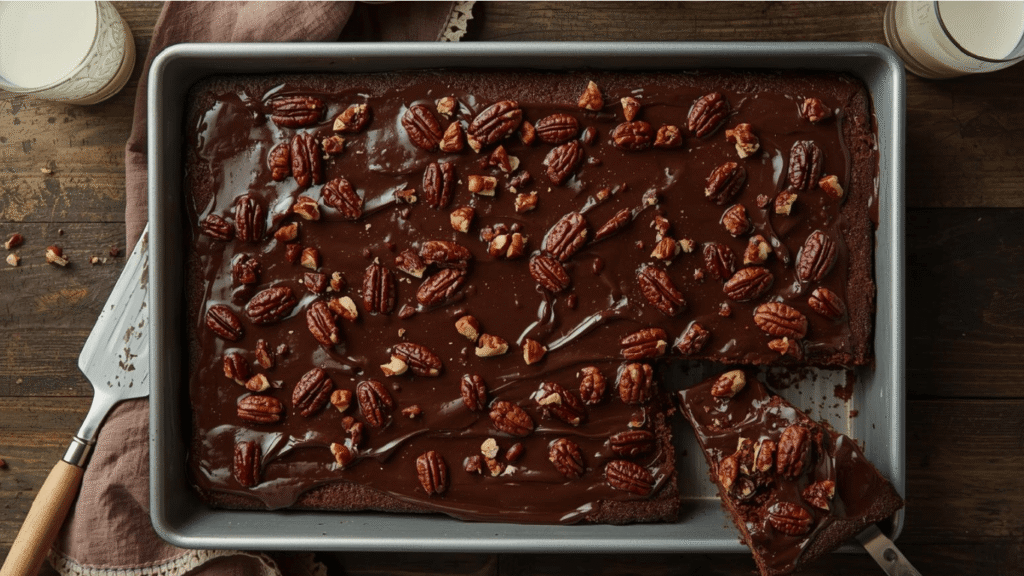
This is the most critical step. About 5 minutes before the cake is done, make the icing. Boil the butter, cocoa, and milk. Remove from heat and whisk in powdered sugar and pecans.
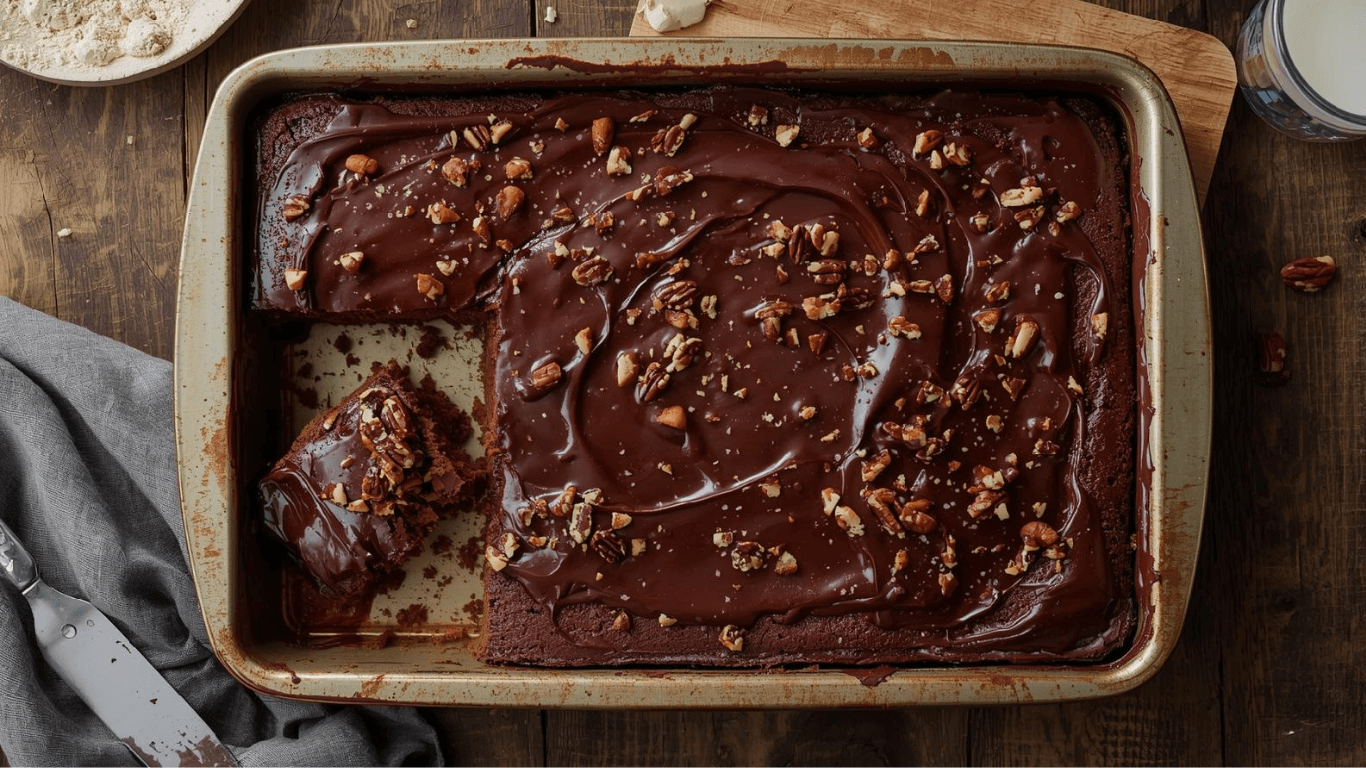
- The Action: Remove the cake from the oven and immediately pour the hot icing over the hot cake.
- The Result: The heat from the cake keeps the icing liquid for longer, allowing it to seep into the top millimeter of the sponge. As they cool together, they fuse, creating a transitional “fudge” layer that prevents the cake from ever drying out.
Discover your next baking masterpiece. Click for sweet inspiration!
Bluey Cake Ideas: How to Make a Simple Bandit Cake (The Ultimate Guide)
Princess Cake: 3 Things To Know Before You Start Baking
Banana Cake: How to Achieve Perfect Moistness in 5 Steps
Harry Potter Cake: A 4-Step Hedwig Owl Cake Guide
Nutritional Information
The Texas Sheet Cake is a rich indulgence. Here is the breakdown per slice (based on 24 servings).
| Nutrient | Amount | % Daily Value* |
| Calories | 320 kcal | 16% |
| Total Fat | 16g | 21% |
| Saturated Fat | 9g | 45% |
| Cholesterol | 45mg | 15% |
| Carbohydrates | 44g | 16% |
| Sugars | 35g | – |
| Protein | 3g | 6% |
Data Insight: While high in sugar, the addition of walnuts or pecans adds approximately 3g of unsaturated “heart-healthy” fats and Omega-3s per serving.

- Reinforced die-cast aluminum construction ensures long-term durability and reliability while maintaining a lightweight d…
- A top-level, harder nonstick granite material with 10x Ultra Non-stick performance ensures your daily cooking always saf…
- Recommend to hand wash the cookware as it is effortless to clean. Wipe it with a paper towel or rinse it with water.
Healthier Alternatives for the Recipe
You can modernize this Southern classic to fit improved dietary profiles without losing the soul of the dish.
- Fat Reduction: Substitute 50% of the butter in the cake base with Unsweetened Applesauce. The pectin in the apples mimics the fat’s tenderizing properties, keeping the cake moist while cutting calories.
- Sugar Swap: Use Coconut Sugar for the cake base. It has a lower glycemic index and adds a caramel note that pairs beautifully with chocolate.
- Gluten-Free: This recipe adapts incredibly well to a 1:1 Gluten-Free Flour Blend (with Xanthan gum). Because the cake is thin and relies on the boiling water method, it doesn’t suffer from the “gummy” texture issues common in GF layer cakes.
Serving Suggestions
Serving a Texas Sheet Cake is an art form in itself.
- Temperature Matters: Serve slightly warm. The icing will be gooey and the pecans toasted.
- The Contrast: A scoop of high-quality Vanilla Bean Ice Cream is mandatory in many households. The cold cream melting into the warm fudge creates a sensory experience known as mouthfeel contrast, highly rated in food satisfaction studies.
- Potluck Style: Because it is baked and served in the same pan, it travels easily. Cut it into diamonds instead of squares for a more elegant presentation at events.
Common Mistakes to Avoid
Even with a simple method, chemistry can go wrong.
- Cooling the Cake First:
- The Mistake: Waiting for the cake to cool before icing (like you would a layer cake).
- The Result: The icing sits on top like a hard shell and cracks when cut. The cake underneath becomes dry.
- The Fix: Hot icing on hot cake. Always.
- Lumpy Icing:
- The Mistake: Dumping powdered sugar straight from the bag.
- The Result: White pockets of sugar in your chocolate glaze.
- The Fix: Sift the sugar or whisk it very vigorously while the butter mixture is still boiling hot.
- Over-baking:
- The Mistake: Leaving it in for “just a few more minutes.”
- The Result: A dry, crunchy cookie rather than a moist cake.
- The Fix: Check at 18 minutes. The center should spring back.
Storing Tips for the Recipe
Thanks to the “icing seal,” this cake has excellent shelf life.
- Room Temperature: This is best. Cover the pan with foil or a lid. It stays fresh for 3-4 days. The sugar in the icing acts as a preservative.
- Refrigeration: Avoid if possible. The cold temperature crystalizes the butter in the cake, making it feel stale even when it isn’t. If you must refrigerate, microwave a slice for 10 seconds before eating.
- Freezing: Flash freeze slices on a baking sheet, then wrap in plastic. They thaw in a lunchbox by noon, making them a perfect treat.
Conclusion
The Texas Sheet Cake is a testament to the power of technique over complexity. By mastering the “boil, mix, bake” workflow and the crucial 2-step icing application, you create a dessert that punches far above its weight class. It is efficient, economical, and scientifically designed to remain moist for days.
Ready to bake the best sheet cake of your life? Don’t forget to tag us in your photos of that glossy pour! Leave a comment below with your favorite nut topping, and subscribe for more deep dives into the science of baking.
FAQs
Q: Why is it called Texas Sheet Cake?
A: While theories abound, the most accepted is simply the size—it is as big as Texas! Some also attribute it to a recipe published in the Dallas Morning News in 1957.
Q: Can I bake this in a standard 9×13 pan?
A: Yes, but the physics change. You will have a thicker cake (more like a brownie), and you must increase the baking time to 35-40 minutes. The icing-to-cake ratio will also be different.
Q: My icing is grainy. What happened?
A: This usually happens if the butter/milk mixture wasn’t hot enough when you added the sugar, or you didn’t whisk it enough to dissolve the sugar crystals.
Q: Can I leave out the nuts?
A: Absolutely. While pecans are traditional in the South, the cake is delicious without them. You can also sprinkle sprinkles on top for a festive birthday version.
Your feedback helps other cooks succeed. Rate this recipe!
Good, But Very Sweet
This cake lives up to its reputation for being easy and feeding a crowd. The texture was perfectly moist and the icing set up with a nice glossy finish. However, I found it overwhelmingly sweet for my taste. Next time, I’ll definitely reduce the sugar in the icing by at least half a cup. It’s a great base recipe, but if you prefer desserts that are less cloyingly sweet, be prepared to adjust. Still, you can’t beat it for simplicity.
A Classic Done Right
After trying several recipes that were too dry or too sweet, I’ve finally found the one. This Texas Sheet Cake is perfection. The boiling method for both the batter and icing creates an intensely rich chocolate flavor and that signature texture. The instructions for timing the icing are spot-on. My only tweak was to use a mix of walnuts and pecans. It’s incredibly rich, so cut small squares! This is the definitive recipe for a true classic.
The Potluck Champion!
This Texas Sheet Cake recipe is my new secret weapon for any gathering. It’s shockingly easy and comes together in one pan—minimal cleanup is a huge win. The cake is incredibly moist and the icing is pure magic; pouring it on the warm cake creates this fudgy, crackly top that’s absolutely addictive. I brought it to a work potluck and it was demolished in 15 minutes. A total crowd-pleaser that’s as reliable as it is delicious. Five stars!