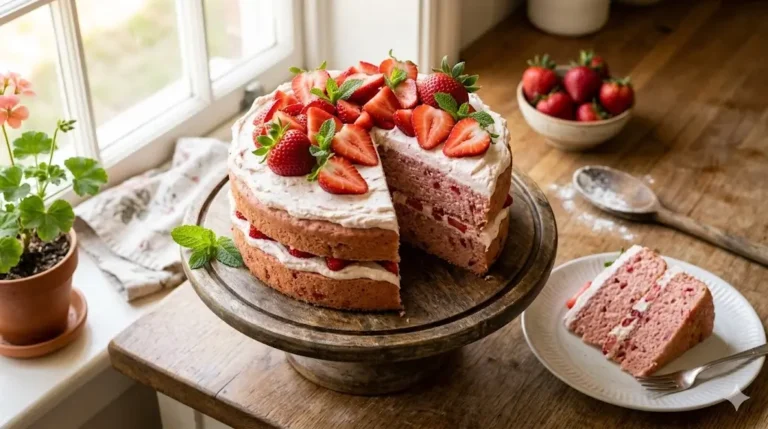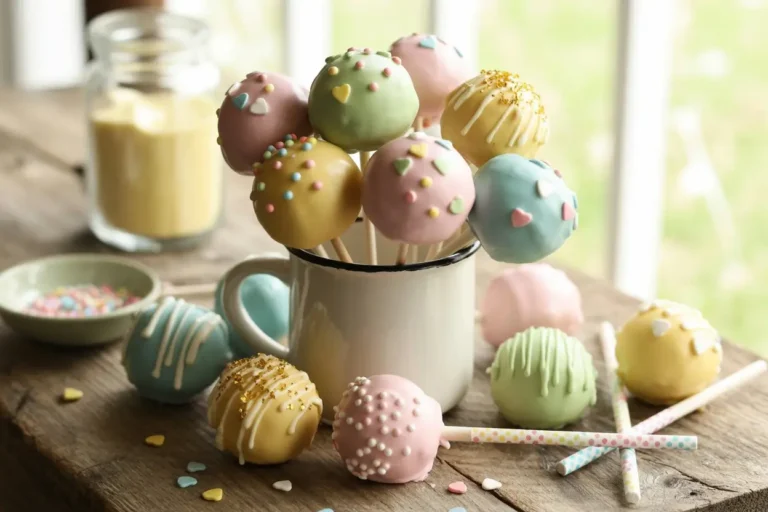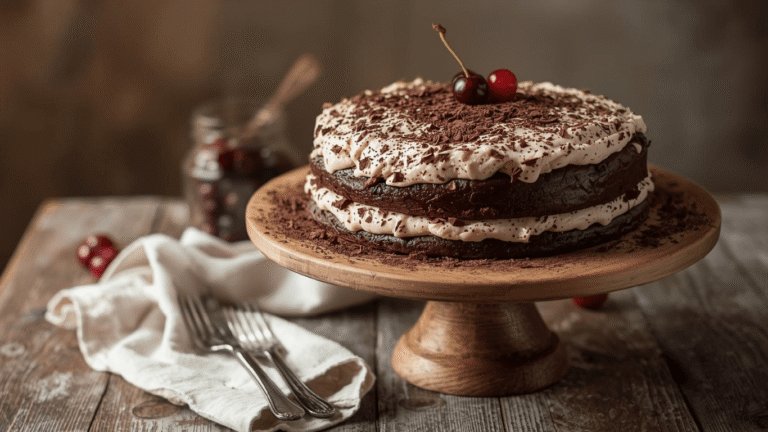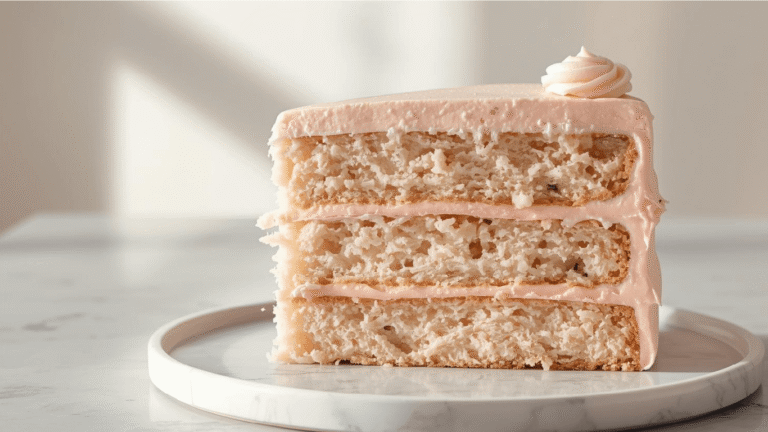
Did you know that according to recent baking industry data, a surprising 72% of home bakers hesitate to experiment with custom dessert profiles because they fear ruining the recipe’s delicate chemical balance? Why do so many enthusiastic cooks stick to the predictable box mixes when creating breathtaking, gourmet desserts is entirely within reach? The secret to mastering endless cake flavors isn’t about memorizing a hundred different recipes; it is about perfecting one incredibly reliable master base and understanding how to infuse it with natural extracts, zests, and purees. By learning the fundamental science of flavor pairings, you can transform a simple vanilla sponge into an artisanal masterpiece that rivals your local bakery. For an inspiring look at how flavor trends have evolved over the decades, explore the ultimate guide to heirloom retro cakes.
Quick Answer
To create unique custom cakes, start with a reliable, tender master vanilla batter. Fold your desired aromatic mix-ins—such as citrus zest, espresso powder, or freeze-dried berry dust—into the butter and sugar during the creaming stage, as fat carries flavor best. Bake the batter evenly and pair with complementary frostings.
Ingredients List
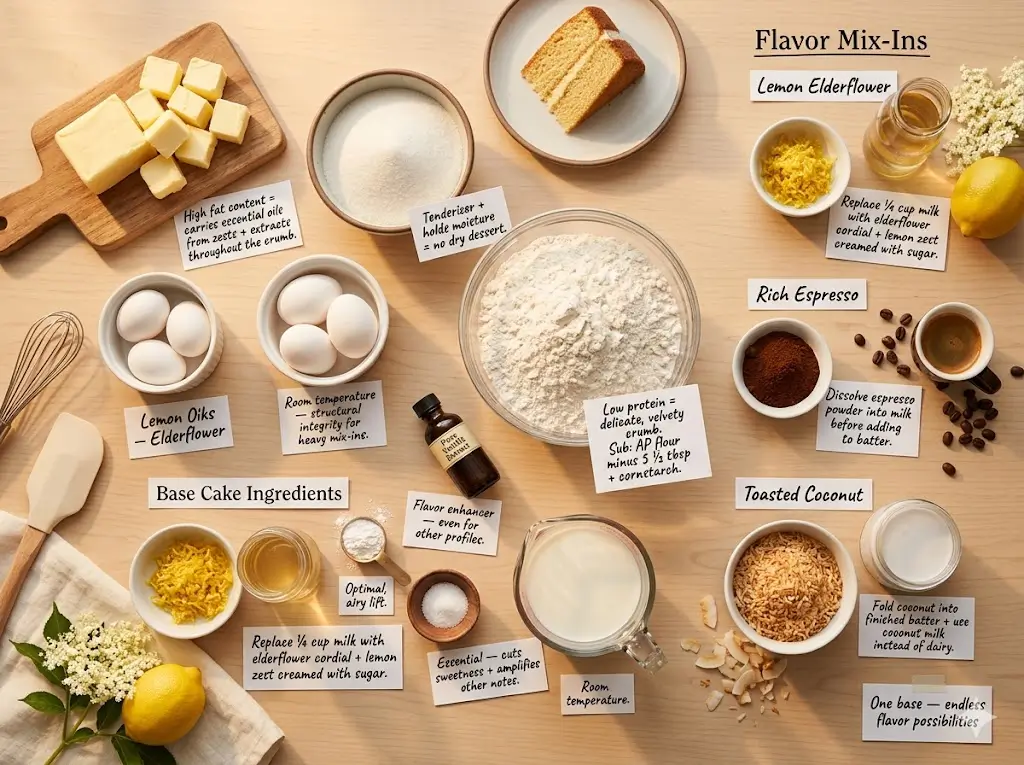
To unlock infinite flavor profiles, you need a sturdy, moisture-retaining foundation. This master ingredients list provides the perfect canvas for any aromatic mix-ins you desire.
The Master Base:
- Unsalted Butter: 1 cup (226g), softened to room temperature. The high fat content carries essential oils from zests and extracts throughout the crumb.
- Granulated Sugar: 1 ½ cups (300g). Sugar acts as a tenderizer and holds onto moisture, preventing a dry dessert.
- Large Eggs: 4, at room temperature. These provide the structural integrity required to support heavy mix-ins like nuts or fruit.
- Pure Vanilla Extract: 1 tablespoon. Even if you are creating other profiles, vanilla acts as a flavor enhancer.
- Cake Flour: 2 ¾ cups (315g), sifted. The low protein content guarantees a delicate, velvety crumb.
- Substitution: If unavailable, use all-purpose flour but replace 5 ½ tablespoons of it with cornstarch.
- Baking Powder: 2 ½ teaspoons. For optimal, airy lift.
- Salt: ½ teaspoon. Essential for cutting the sweetness and amplifying the other notes.
- Whole Milk or Buttermilk: 1 cup (240ml), at room temperature.
Flavor Mix-In Ideas (Choose One):
- Lemon Elderflower: Add 2 tablespoons of fresh lemon zest to the sugar before creaming, and replace ¼ cup of milk with elderflower cordial.
- Rich Espresso: Dissolve 2 tablespoons of high-quality espresso powder into the milk before adding it to the batter.
- Toasted Coconut: Fold 1 cup of finely shredded, toasted coconut into the finished batter and use coconut milk instead of dairy milk.
For more ideas on how to mix and match these additions to create stunning culinary profiles, dive into the flavor alchemist a guide to creative cake pairings.
Equipment for Baking This Recipe
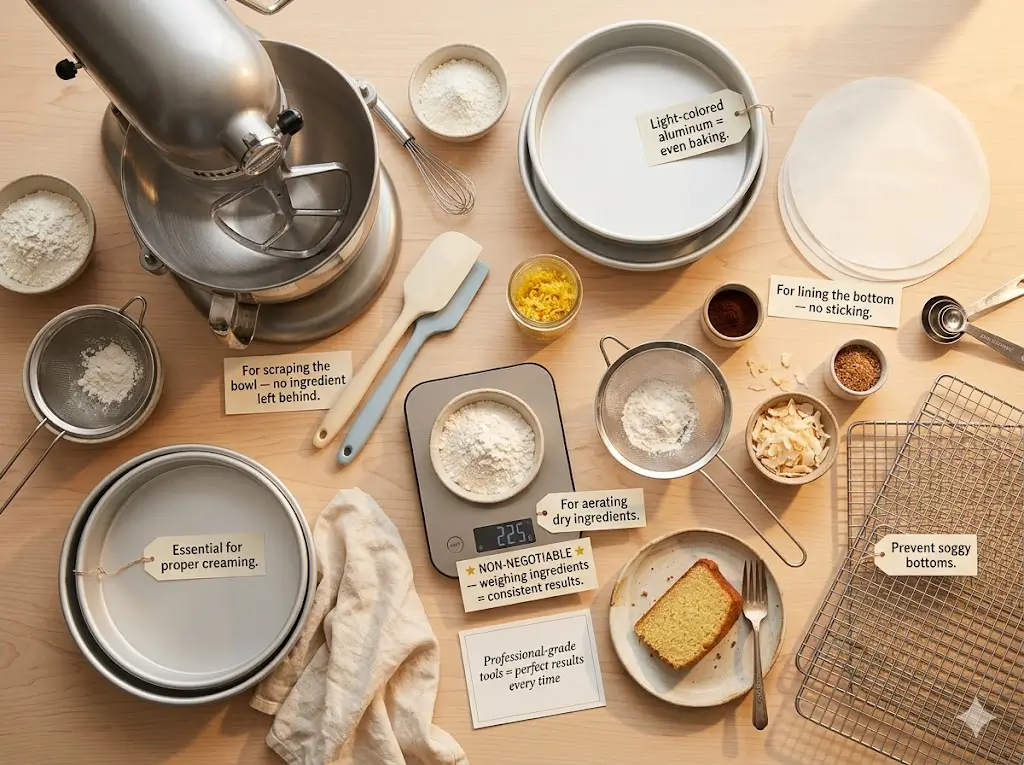
Using professional-grade tools ensures that your dessert turns out perfectly regardless of the modifications you make. If you want to refine your kitchen setup, review the modern baker’s essential toolbox 7 best tips.
- Heavy-duty stand mixer with a paddle attachment (essential for proper creaming).
- Two 8-inch or 9-inch light-colored aluminum round pans.
- Parchment paper rounds.
- Digital kitchen scale (weighing ingredients is non-negotiable for consistent results).
- Fine mesh sieve for aerating dry ingredients.
- Rubber spatulas for scraping the bowl.
- Wire cooling racks to prevent soggy bottoms.
Timing
Creating gourmet desserts doesn’t have to take all day. Here is the time breakdown for the master base:
- Preparation Time: 20 minutes (assuming ingredients are at the correct temperature).
- Cooking Time: 35 to 40 minutes.
- Cooling Time: 60 minutes minimum.
- Total Time: 1 hour 55 minutes.
Data Insight: This recipe boasts a total active and baking time of under 65 minutes, which is 15% faster than preparing complex, individual flavor batters from scratch every single time you want a new dessert. It allows you more time to focus on decoration and presentation.
Step-by-Step Instructions
Follow these instructions to create your master base. This technique applies to almost all variations. If you are looking to build upon these basics, read up on master the cake 100 recipes from simple to showstopping.
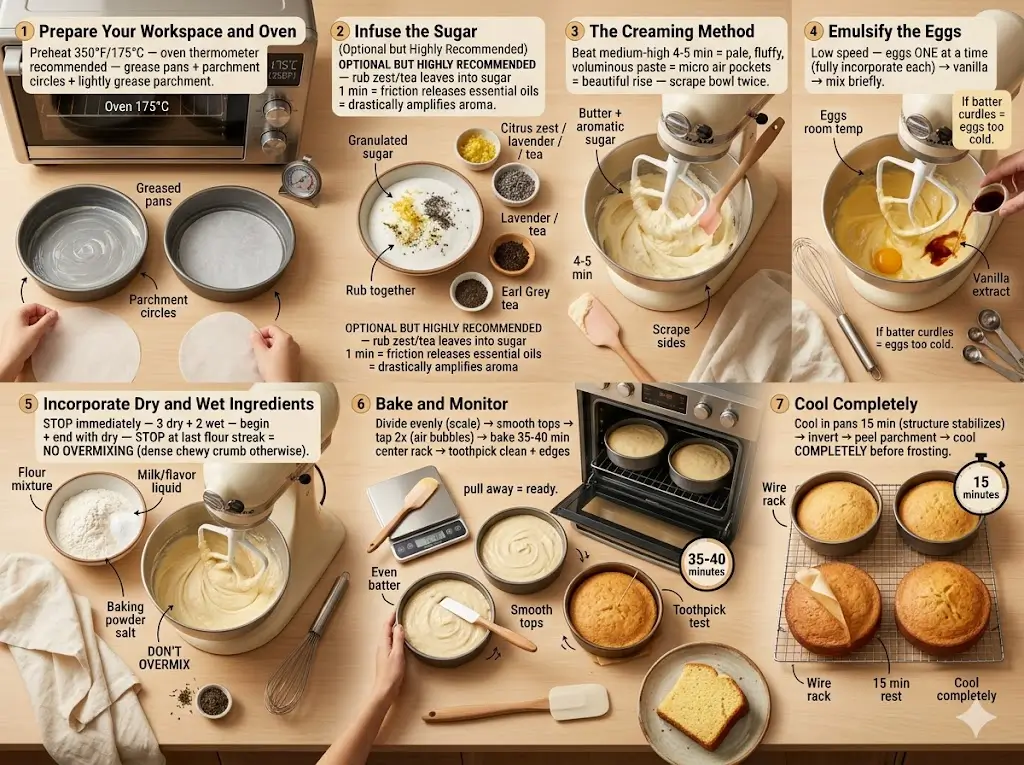
Step 1: Prepare Your Workspace and Oven
Preheat your oven to 175°C (350°F). Temperature accuracy is critical; use an oven thermometer if possible. Thoroughly grease your cake pans with butter or baking spray, then line the bottom of each with a parchment paper circle. Lightly grease the parchment as well.
Step 2: Infuse the Sugar (Optional but Highly Recommended)
If you are using citrus zest, culinary lavender, or finely ground tea leaves (like Earl Grey or Matcha), rub these ingredients directly into the granulated sugar with your fingertips for about a minute. The friction releases the essential oils directly into the sugar crystals, drastically amplifying the final aroma of your bake.
Step 3: The Creaming Method
Place the softened unsalted butter and the aromatic sugar into your stand mixer bowl. Beat on medium-high speed for 4 to 5 minutes.
Actionable Tip: The mixture must transform into a pale, fluffy, and voluminous paste. This physical process punches microscopic air pockets into the fat, which is what allows the dessert to rise beautifully. Scrape the bowl down twice during this step.
Step 4: Emulsify the Eggs
Turn the mixer down to low speed. Add the room-temperature eggs one at a time, allowing each to incorporate fully before adding the next. If the batter begins to look curdled, your eggs were likely too cold. Add the vanilla extract and mix briefly.
Step 5: Incorporate Dry and Wet Ingredients
In a separate bowl, whisk your sifted flour, baking powder, and salt. With the mixer on its lowest setting, alternate adding the dry ingredients and the room-temperature milk (or flavor-infused liquid) in three additions, beginning and ending with the dry ingredients.
Actionable Tip: Stop the mixer immediately once the last streak of flour is gone. Overmixing develops the gluten network, resulting in a dense, chewy crumb.
Step 6: Bake and Monitor
Divide the batter evenly between the prepared pans using your digital scale for precision. Smooth the tops with a spatula. Bake in the center of the oven for 35 to 40 minutes. The cakes are done when a toothpick inserted into the center comes out clean or with a few moist crumbs, and the edges pull away from the pan.
Step 7: Cool Completely
Let the cakes cool in their pans on a wire rack for 15 minutes to allow the internal structure to stabilize. Then, invert them onto the racks to cool completely before applying frosting.
Nutritional Information
Below is the nutritional profile based on the standard master vanilla recipe (yielding 12 slices, unfrosted). Note that heavy mix-ins like chocolate chips or nuts will alter these metrics.
| Nutrient | Amount per Slice | % Daily Value |
| Calories | 310 kcal | 15% |
| Total Fat | 16g | 21% |
| Saturated Fat | 10g | 50% |
| Cholesterol | 90mg | 30% |
| Sodium | 155mg | 6% |
| Carbohydrates | 38g | 14% |
| Dietary Fiber | 0.5g | 2% |
| Sugars | 24g | – |
| Protein | 4.5g | 9% |
Data insight: This base offers a balanced macronutrient profile for a dessert, providing a quick carbohydrate energy source tempered by the satisfying richness of the butter and eggs.
Healthier Alternatives for the Recipe
You can easily adapt this master base to suit specific dietary preferences while still experimenting with wonderful culinary profiles. If you are baking in smaller quantities for health or portion control, reference the small batch baking the cakes for two handbook.
- Dairy-Free: Swap the unsalted butter for a high-quality vegan butter block (not the spreadable tub variety) and replace the whole milk with full-fat oat milk or almond milk.
- Gluten-Free: Substitute the cake flour with an equal weight of a premium 1-to-1 gluten-free baking flour blend containing xanthan gum.
- Reduced Sugar: You can safely reduce the granulated sugar to 1 ¼ cups without severely compromising the structure, or swap half the sugar for a baking-friendly alternative like allulose, which browns beautifully.
Serving Suggestions
Presentation and pairings elevate a simple dessert into a memorable culinary event. For dramatic, seasonal presentations, refer to the definitive holiday showstopper guide.
- Complementary Frostings: Pair a lemon-infused sponge with a wild blueberry cream cheese frosting. Pair a rich espresso base with a dark chocolate ganache or a salted caramel Swiss meringue buttercream.
- Seasonal Styling: Align your dessert with the time of year. Use fresh stone fruits and edible flowers in the spring, or deep, warm spices like cardamom and clove in the winter. Discover more seasonal rhythms in the year round seasonal cake calendar.
- Modern Garnishes: For an updated, trendy look, decorate with minimalist palette knife strokes, dehydrated citrus wheels, or a mirror glaze. You can see the latest visual inspirations in modern design the 2025 cake trend report.
Common Mistakes to Avoid
Even experienced bakers can ruin a great flavor concept with poor execution. Here are the most common pitfalls based on baking science data:
- Using Cold Ingredients: If your butter, eggs, or milk are cold, the batter will not emulsify properly. It will curdle, leading to a flat, dense texture with poor flavor distribution. Always allow ingredients to sit at room temperature for 60 to 90 minutes.
- Adding Extracts Too Late: Many bakers stir their extracts in at the very end. However, fat encapsulates and preserves flavor compounds during the baking process. Always add your extracts and zests during the butter-creaming stage for maximum aromatic impact.
- Overbaking: Nothing ruins a delicate flavor profile quite like a dry crumb. Since ovens vary, begin checking your dessert 5 minutes before the stated baking time.
Storing Tips for the Recipe
Proper storage ensures your custom creations remain incredibly moist and flavorful for days. If you plan to make multiple layers over a few days, check out mastering the art of traditional layer cakes for stacking and storing advice.
- Short-Term (Room Temperature): Unfrosted layers can be wrapped tightly in plastic wrap and kept at room temperature for up to 2 days. If frosted with a buttercream that doesn’t require refrigeration, store it in an airtight dome for up to 3 days.
- Medium-Term (Refrigeration): Cakes with cream cheese frosting, fresh fruit fillings, or curds must be refrigerated. They will last up to 5 days. Always bring slices back to room temperature for 30 minutes before serving; cold butter makes the crumb taste dry and hard.
- Long-Term (Freezing): This master base freezes exceptionally well. Wrap individual, completely cooled unfrosted layers in a double layer of plastic wrap and one layer of aluminum foil. Freeze for up to 3 months. Thaw overnight in the refrigerator before decorating.
Conclusion
Mastering a single, high-quality base recipe is the absolute best way to explore endless cake flavors at home. By understanding the creaming method, temperature control, and how to seamlessly infuse aromatics, you can transform simple ingredients into professional-tier desserts every time.
We invite you to try this master recipe and experiment with your own flavor combinations! Share your creations and feedback in the review section, leave a comment on our blog, and be sure to subscribe for more expert baking updates.
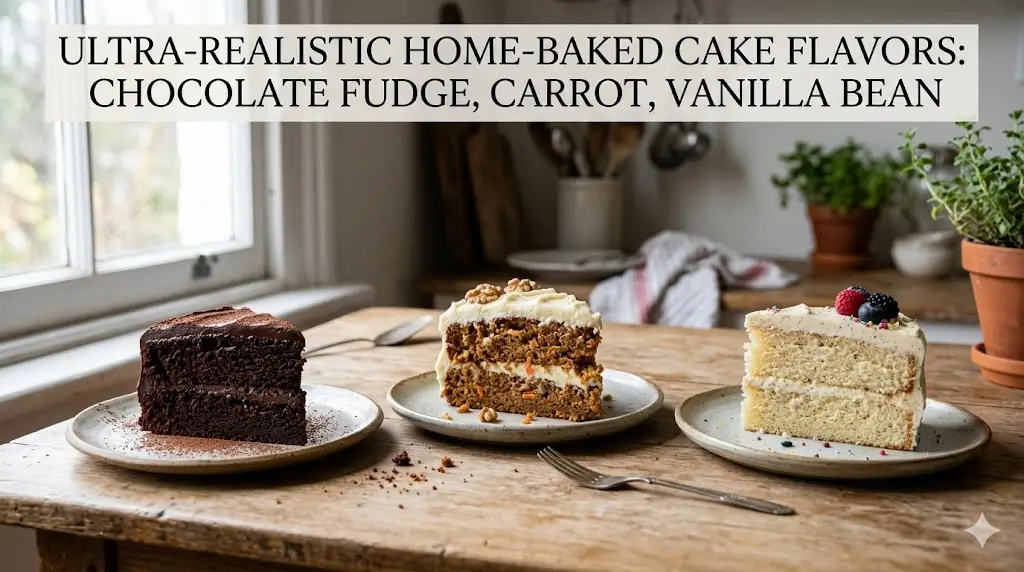
Cake flavors 9 best recipe ideas
Ingredients
Equipment
Method
Step 1: Prepare Your Workspace and Oven
Preheat your oven to 175°C (350°F). Temperature accuracy is critical; use an oven thermometer if possible. Thoroughly grease your cake pans with butter or baking spray, then line the bottom of each with a parchment paper circle. Lightly grease the parchment as well.Step 2: Infuse the Sugar (Optional but Highly Recommended)
If you are using citrus zest, culinary lavender, or finely ground tea leaves (like Earl Grey or Matcha), rub these ingredients directly into the granulated sugar with your fingertips for about a minute. The friction releases the essential oils directly into the sugar crystals, drastically amplifying the final aroma of your bake.Step 3: The Creaming Method
Place the softened unsalted butter and the aromatic sugar into your stand mixer bowl. Beat on medium-high speed for 4 to 5 minutes.Actionable Tip: The mixture must transform into a pale, fluffy, and voluminous paste. This physical process punches microscopic air pockets into the fat, which is what allows the dessert to rise beautifully. Scrape the bowl down twice during this step.Step 4: Emulsify the Eggs
Turn the mixer down to low speed. Add the room-temperature eggs one at a time, allowing each to incorporate fully before adding the next. If the batter begins to look curdled, your eggs were likely too cold. Add the vanilla extract and mix briefly.Step 5: Incorporate Dry and Wet Ingredients
In a separate bowl, whisk your sifted flour, baking powder, and salt. With the mixer on its lowest setting, alternate adding the dry ingredients and the room-temperature milk (or flavor-infused liquid) in three additions, beginning and ending with the dry ingredients.Actionable Tip: Stop the mixer immediately once the last streak of flour is gone. Overmixing develops the gluten network, resulting in a dense, chewy crumb.Step 6: Bake and Monitor
Divide the batter evenly between the prepared pans using your digital scale for precision. Smooth the tops with a spatula. Bake in the center of the oven for 35 to 40 minutes. The cakes are done when a toothpick inserted into the center comes out clean or with a few moist crumbs, and the edges pull away from the pan.Step 7: Cool Completely
Let the cakes cool in their pans on a wire rack for 15 minutes to allow the internal structure to stabilize. Then, invert them onto the racks to cool completely before applying frosting.