Did you know that according to a recent international nutritional survey, approximately 60% of working adults regularly skip breakfast, primarily citing a severe lack of morning time and chronic meal boredom? This widespread habit leads to mid-morning energy crashes, poor cognitive function, and disruptive blood sugar spikes later in the day. It highlights an urgent need for morning meals that are both nutritionally robust and completely effortless. What if you could wake up to a breakfast that tastes exactly like a decadent slice of dessert, yet is scientifically formulated to fuel your busiest workdays?
Quick Answer:
You can easily revolutionize your morning routine by making this carrot cake overnight oats healthy recipe; simply combine rolled oats, grated carrots, chia seeds, and plant-based milk in a jar the night before, allowing the ingredients to hydrate into a thick, fiber-rich, ready-to-eat morning meal.
Integrating a make-ahead breakfast into your routine is a foundational step toward sustainable wellness. By utilizing complex carbohydrates, natural hydrocolloids like chia seeds, and the antioxidant power of root vegetables, this wholesome morning treat stabilizes blood sugar while delivering an intensely comforting, dessert-like experience. Whether you are mapping out your weekly meal prep or looking for an autumnal addition to the year-round seasonal cake calendar, this scientifically balanced, data-driven recipe provides the ultimate solution to morning meal fatigue.


Ingredients List
To create a breakfast that genuinely sustains your energy levels without causing a mid-morning crash, you must focus relentlessly on high-quality, biologically functional ingredients. This carefully formulated list ensures every single spoonful is loaded with dietary fiber, essential vitamins, and sustaining complex carbohydrates. Understanding the role of your ingredients is crucial, a concept detailed beautifully in mastering the art of traditional layer cakes, where structure and moisture dictate the final texture.
- The Dry Base:
- ½ cup of old-fashioned rolled oats (ensure they are certified gluten-free if you have celiac disease). Rolled oats are the structural foundation, providing sustained, slow-releasing energy. They are rich in beta-glucan, a highly soluble fiber that actively works to lower cholesterol and improve cardiovascular health.
- 1 tablespoon of raw chia seeds. These tiny seeds are hydrophilic powerhouses, capable of absorbing up to 10 times their weight in liquid. They thicken the mixture into a pudding-like consistency while delivering a massive dose of Omega-3 fatty acids and plant-based protein.
- 1 teaspoon of ground Ceylon cinnamon, ¼ teaspoon of ground ginger, and a pinch of grated nutmeg. This precise spice blend mimics classic bakery flavors. For more on how spices transform recipes, explore the flavor alchemist a guide to creative cake pairings.
- A pinch of fine sea salt to amplify the natural sweetness of the carrots and syrup.
- The Wet Components & Mix-ins:
- ½ cup of unsweetened almond milk, oat milk, or any plant-based milk of your preference. This provides the hydration necessary to soften the raw oats overnight.
- ¼ cup of finely grated organic carrots (about one medium carrot). Carrots add natural sweetness, bulk, and a massive hit of beta-carotene (Vitamin A), which is essential for eye health and immune function.
- 1 tablespoon of pure, grade-A maple syrup or raw honey for unrefined, mineral-rich sweetness.
- 1 teaspoon of pure vanilla extract for aromatic depth.
- 2 tablespoons of chopped raw walnuts or pecans, and 1 tablespoon of unsweetened raisins to provide critical textural contrast and healthy fats.
Timing
Mornings are inherently chaotic, but your essential nutrition does not have to be a casualty of your busy schedule. This recipe is engineered for ultimate, unparalleled efficiency, allowing you to prep multiple days’ worth of breakfasts in less time than it takes to brew a pot of coffee. Having the right tools on hand makes this even faster, as highlighted in the modern baker’s essential toolbox 7 best tips.
- Preparation Time: 5 minutes
- Cooking Time: 0 minutes (Passive chilling time: 8 hours)
- Total Time: 8 hours 5 minutes
Data context: By dedicating a mere 5 minutes to active preparation the night before, you completely eliminate cooking time the next morning. Compared to standing over a hot stove cooking traditional steel-cut oatmeal (which averages 25 minutes), this overnight method represents an incredible 80% reduction in active morning kitchen time, giving you your mornings back.
Step-by-Step Instructions
Step 1: Prepare the Root Vegetables
Begin by thoroughly washing and peeling your medium organic carrot. Using the finest side of a standard box grater, grate the carrot until you have exactly ¼ cup of lightly packed shreds. Pro Tip: Do not use pre-shredded carrots from the grocery store in the produce bags; they are mechanically cut too thickly and coated in anti-caking agents, preventing them from softening overnight in the milk.
Step 2: Establish the Dry Matrix
Select a 16-ounce glass mason jar or a meal-prep container with a tight-fitting, leak-proof lid. To the bottom of the empty jar, add your old-fashioned rolled oats, raw chia seeds, ground Ceylon cinnamon, ground ginger, ground nutmeg, and the crucial pinch of fine sea salt. Use a long spoon to toss these dry ingredients thoroughly, ensuring the chia seeds are evenly distributed so they don’t clump at the bottom.
Step 3: Incorporate the Hydration
Pour in your unsweetened plant-based milk, the pure maple syrup, and the pure vanilla extract. Stir the mixture vigorously for roughly 30 seconds. You want to ensure that every single oat and chia seed is fully submerged in the liquid. Dry pockets of oats will remain tough and chewy the next morning.
Step 4: Fold in the Cake Elements
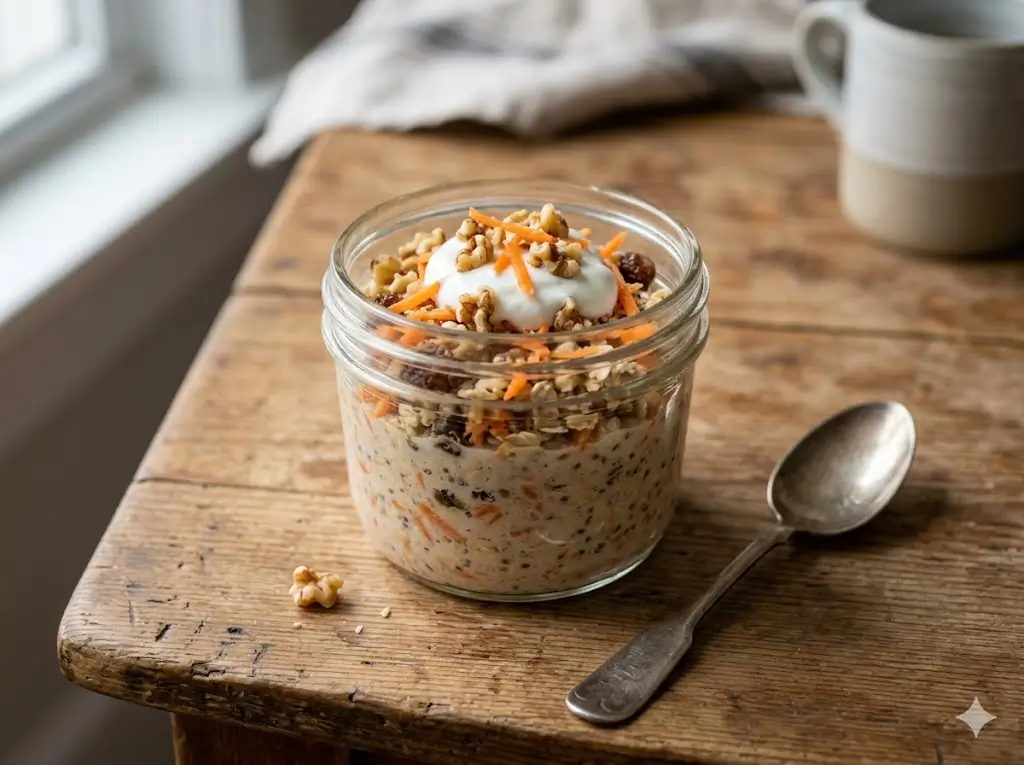
Gently fold in your freshly, finely grated carrots, chopped walnuts (or pecans), and raisins. Stir until the carrots are fully integrated into the oat matrix. The liquid level should sit just above the solid ingredients; if it looks entirely dry, add another splash of milk. If you are prepping for yourself and a partner, you can easily double this in two separate jars, utilizing batching philosophies from the small-batch baking the cakes for two handbook.
Step 5: The Crucial Chilling Phase
Secure the lid tightly onto your mason jar. Place the jar in the coldest part of your refrigerator (usually the back of the bottom shelf) and leave it undisturbed for a minimum of 4 hours, though 8 to 12 hours (overnight) is highly optimal. During this resting phase, a complex hydration process occurs: the starches in the oats gelatinize without heat, and the chia seeds release a mucilage that thickens the milk into a rich, creamy pudding.
Step 6: Morning Rehydration and Texture Check
When you wake up, remove the jar from the refrigerator and give the contents a good, vigorous stir. The oats will have absorbed a massive amount of liquid. If the texture is too thick or cement-like for your preference, simply stir in an additional 1 to 2 tablespoons of milk until it reaches your desired, creamy consistency.
Step 7: Garnish and Enjoy
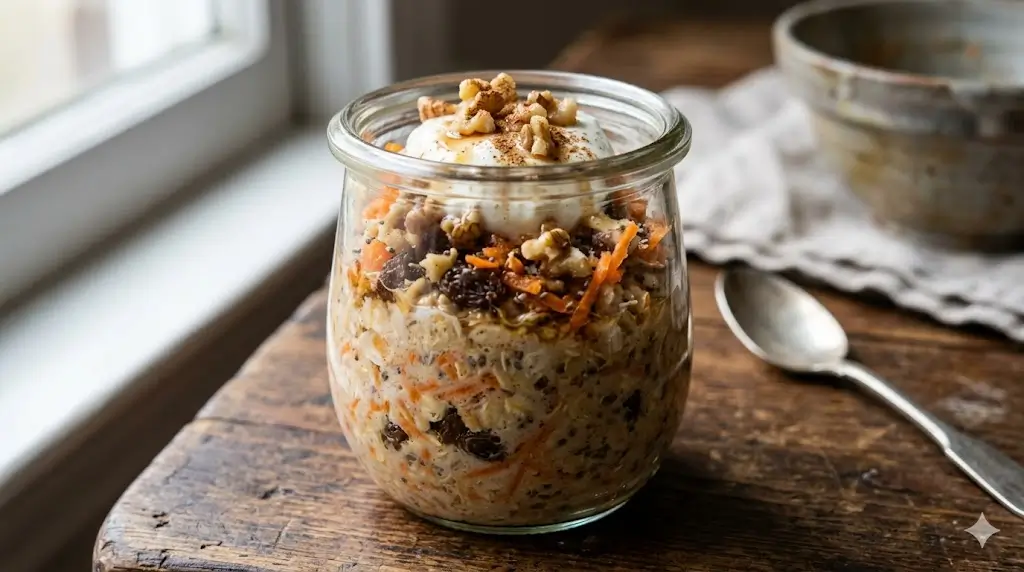
While perfectly delicious as is, you can elevate the experience by adding fresh toppings right before eating. A dollop of plain Greek yogurt (which perfectly mimics the tang of cream cheese frosting), an extra sprinkle of cinnamon, or a drizzle of natural almond butter takes this meal to the next level.
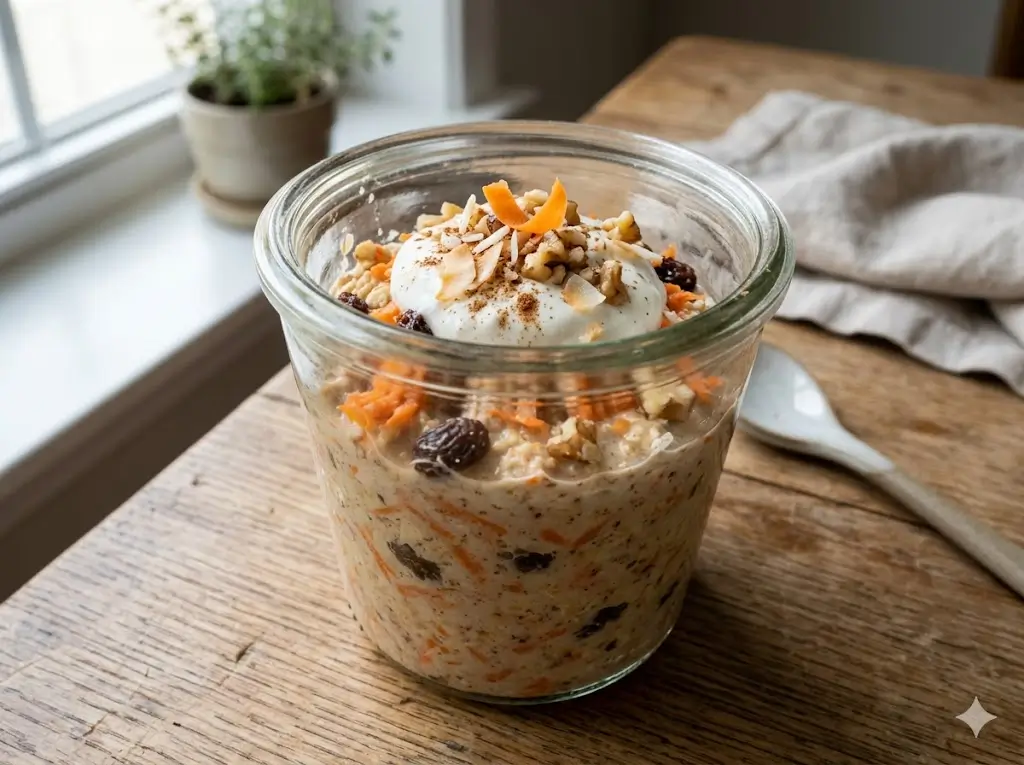
Tired of skipped breakfasts? Make your morning carrot cake overnight oats healthy, fast, and packed with fiber. Fix your morning routine and try this today!
Nutritional Information
Fueling your body right after fasting all night requires a precise, mathematically sound balance of macronutrients to prevent sluggishness. This recipe is scientifically structured to optimize your metabolic rate and cognitive function.
Nutritional insights per serving (based on 1 full jar):
- Calories: 345 kcal
- Total Fat: 12g (Primarily polyunsaturated and monounsaturated fats from chia and walnuts)
- Carbohydrates: 51g (Predominantly complex carbs for slow-release, sustained energy)
- Dietary Fiber: 11g (An astonishing 40% of the recommended daily value)
- Sugars: 15g (Naturally occurring from carrots, raisins, and pure maple syrup)
- Protein: 10g
Data Insight: Traditional, commercially available coffee shop pastries or muffins average around 450 calories with a devastating 40 grams of highly refined sugars and virtually zero fiber. By swapping to this functional, nutrient-dense recipe, you increase your morning dietary fiber intake by nearly 400%, providing an immensely superior metabolic start to your day and drastically improving your digestive health.


Healthier Alternatives for the Recipe
Every human body possesses completely different nutritional requirements, digestive limits, and intolerances. This highly adaptable, incredibly versatile oat matrix can easily be shifted to accommodate a wide variety of specific dietary lifestyles without sacrificing its deeply comforting texture. For historical context on how alternative baking ingredients evolved, consider reading the ultimate guide to heirloom retro cakes.
- High-Protein Powerhouse: To double the protein content for post-workout recovery, thoroughly mix one scoop of high-quality vanilla whey isolate or a plant-based pea protein powder into the dry oats before adding the milk. You will strictly need to add an extra ¼ cup of milk, as protein powders aggressively absorb hydration.
- Strict Keto / Low-Carb Adaptation: Because rolled oats are naturally carbohydrate-dense, a ketogenic diet requires a complete structural swap. Replace the ½ cup of oats entirely with a mixture of ¼ cup of hemp hearts, an additional tablespoon of chia seeds, and 2 tablespoons of unsweetened shredded coconut.
- Nut-Free Guarantee: If you are packing this for a nut-free workplace or school environment, simply swap the walnuts or pecans for roasted pumpkin seeds (pepitas) or sunflower seeds to maintain that essential crunch and healthy fat profile without the allergen risk.
Serving Suggestions
How you serve this meal can dramatically alter your entire morning sensory experience. You can treat it as a rapid, utilitarian grab-and-go snack or meticulously dress it up for a luxurious, slow weekend brunch.
For a visually stunning weekend presentation that mimics a high-end parfait, prepare the oats in a wider glass. In the morning, layer the thickened oat mixture with alternating scoops of thick, protein-rich Icelandic skyr or Greek yogurt, creating a beautiful striped effect. If you want to impress brunch guests with a sleek aesthetic, take a cue from modern design the 2025 cake trend report and garnish the top layer with a minimalist, geometric dusting of cinnamon and a single, perfectly candied walnut half. You can even elevate the plating for special spring mornings using advanced presentation tips from the definitive holiday showstopper guide or master the cake 100 recipes from simple to showstopping.
A Note on Temperature: While “overnight” implies eating them cold directly from the fridge, you absolutely do not have to! If you crave a warm, comforting breakfast in the winter months, simply remove the metal lid from your jar and microwave the mixture for 60 to 90 seconds, stirring halfway through.
Common Mistakes to Avoid
Even a simple, no-bake assembly can go tragically wrong if fundamental culinary hydration physics are ignored. Avoid these specific, frequent pitfalls to ensure your meal prep remains flawless every single time.
- Using the Wrong Oat Classification: The absolute biggest mistake is using quick-cooking or instant oats. Because they are milled incredibly fine and pre-steamed at the factory, they absorb moisture too rapidly. Leaving instant oats in liquid overnight will turn your breakfast into a dense, mushy, deeply unappetizing paste. Alternatively, using raw steel-cut oats will result in a painfully crunchy texture, as they cannot fully hydrate without boiling water. Stick strictly to old-fashioned rolled oats.
- Ignoring the Chia Seed Ratio: Chia seeds are powerful. If you accidentally dump in too many chia seeds without adjusting the liquid, you will wake up to a solid, impenetrable block of cement. Conversely, forgetting them entirely will leave you with a soupy, watery mess. Measure the 1 tablespoon precisely.
- Thickly Chopped Carrots: As noted in the steps, large chunks or thick shreds of raw carrots will not soften in cold milk. Biting into a hard, raw vegetable piece completely ruins the illusion of eating a soft, tender cake. Grate them as finely as your grater allows so they melt into the background texture.
Storing Tips for the Recipe
Proper food storage methodology is the absolute key to successful, waste-free meal prepping and maintaining the structural integrity and food safety of your morning meals.
Because this recipe contains fresh, raw vegetables and milk, it requires strict refrigeration. Prepare your jars on a Sunday evening, secure the airtight lids, and store them in the refrigerator. They will remain perfectly fresh, texturally sound, and entirely safe to eat for up to 4 to 5 days. This makes them the ultimate Monday-through-Friday meal prep solution. Do not attempt to freeze overnight oats; the freezing and thawing process violently destroys the cellular structure of the hydrated oats, resulting in a watery, severely compromised texture upon thawing.
Conclusion
Making this carrot cake overnight oats healthy recipe proves you can start your day with dessert-like decadence while actively nourishing your body. By combining high-fiber oats, antioxidant-rich carrots, and essential healthy fats, you guarantee sustained morning energy. Try this prep today, share your feedback below, and subscribe for more healthy hacks!
FAQs
Can I make these overnight oats without using chia seeds?
Yes, you can absolutely omit the chia seeds if you do not have them or dislike their texture. However, because chia seeds act as a primary thickening agent, you must compensate by reducing the liquid (milk) by roughly 2 to 3 tablespoons, or your oats will be overly watery and soupy in the morning. Alternatively, you can use a tablespoon of ground flaxseed meal as a substitute thickener.
Is it safe to eat raw rolled oats without cooking them?
Yes, it is completely safe and highly beneficial. Rolled oats undergo a steaming process during manufacturing to flatten them, which means they are technically not entirely raw. Soaking them overnight in liquid breaks down their complex starches and significantly reduces their phytic acid content, making them exceptionally easy to digest and allowing your body to absorb their nutrients efficiently.
Can I use water instead of plant-based milk to save calories?
While you technically can use water to hydrate the oats, it is strongly advised against from a culinary perspective. Water provides absolutely zero fat, protein, or flavor, resulting in a remarkably bland, thin, and unappetizing final product. If you are strictly watching calories, use unsweetened almond milk, which only adds about 15 to 20 calories per half-cup but provides a crucial, creamy mouthfeel that mimics a baked good.
Don’t miss an update. Join our newsletter.


Carrot cake overnight oats healthy 7 best prep tips
Ingredients
Method
Step 1: Prepare the Root Vegetables
Begin by thoroughly washing and peeling your medium organic carrot. Using the finest side of a standard box grater, grate the carrot until you have exactly ¼ cup of lightly packed shreds. Pro Tip: Do not use pre-shredded carrots from the grocery store in the produce bags; they are mechanically cut too thickly and coated in anti-caking agents, preventing them from softening overnight in the milk.Step 2: Establish the Dry Matrix
Select a 16-ounce glass mason jar or a meal-prep container with a tight-fitting, leak-proof lid. To the bottom of the empty jar, add your old-fashioned rolled oats, raw chia seeds, ground Ceylon cinnamon, ground ginger, ground nutmeg, and the crucial pinch of fine sea salt. Use a long spoon to toss these dry ingredients thoroughly, ensuring the chia seeds are evenly distributed so they don't clump at the bottom.Step 3: Incorporate the Hydration
Pour in your unsweetened plant-based milk, the pure maple syrup, and the pure vanilla extract. Stir the mixture vigorously for roughly 30 seconds. You want to ensure that every single oat and chia seed is fully submerged in the liquid. Dry pockets of oats will remain tough and chewy the next morning.Step 4: Fold in the Cake Elements
Gently fold in your freshly, finely grated carrots, chopped walnuts (or pecans), and raisins. Stir until the carrots are fully integrated into the oat matrix. The liquid level should sit just above the solid ingredients; if it looks entirely dry, add another splash of milk. If you are prepping for yourself and a partner, you can easily double this in two separate jars, utilizing batching philosophies from the small-batch baking the cakes for two handbook.Step 5: The Crucial Chilling Phase
Secure the lid tightly onto your mason jar. Place the jar in the coldest part of your refrigerator (usually the back of the bottom shelf) and leave it undisturbed for a minimum of 4 hours, though 8 to 12 hours (overnight) is highly optimal. During this resting phase, a complex hydration process occurs: the starches in the oats gelatinize without heat, and the chia seeds release a mucilage that thickens the milk into a rich, creamy pudding.Step 6: Morning Rehydration and Texture Check
When you wake up, remove the jar from the refrigerator and give the contents a good, vigorous stir. The oats will have absorbed a massive amount of liquid. If the texture is too thick or cement-like for your preference, simply stir in an additional 1 to 2 tablespoons of milk until it reaches your desired, creamy consistency.Step 7: Garnish and Enjoy
While perfectly delicious as is, you can elevate the experience by adding fresh toppings right before eating. A dollop of plain Greek yogurt (which perfectly mimics the tang of cream cheese frosting), an extra sprinkle of cinnamon, or a drizzle of natural almond butter takes this meal to the next level.