Did you know that despite its reputation as the pinnacle of Parisian patisserie, over 80% of home bakers successfully execute their first French entremet when the components are broken down into manageable, individual steps? The myth that haute pastry requires a commercial kitchen is holding back countless dessert enthusiasts from creating absolute masterpieces. If you have been searching for a sophisticated project to challenge your skills, the legendary opera cake—a stunning, multi-tiered architecture of almond sponge, potent espresso, and rich chocolate—is the ultimate test of precision and flavor balance.
Invented in the mid-20th century (often attributed to the famed French pastry shop Dalloyau), this dessert was designed to evoke the dramatic, tiered seating of the Palais Garnier, the Paris Opera House. Its allure lies not in thick, heavy sponges, but in the delicate, mathematically precise layering of intensely flavored, razor-thin components. While it may seem daunting, mastering this dessert is essentially just mastering three distinct, straightforward recipes and combining them. If you’ve explored our mastering traditional layer cakes guide, you already possess the foundational skills necessary to tackle this elegant, caffeinated marvel.
Quick Answer
To create a classic opera cake, bake three thin layers of almond sponge cake (Joconde). Soak each layer heavily with a potent coffee syrup. Layer the soaked sponges with alternating tiers of rich coffee French buttercream and silky dark chocolate ganache, finishing with a glossy, poured chocolate glaze on top. Chill thoroughly before slicing into clean, precise rectangles.
Ingredients List
Building a world-class opera cake requires organizing your mise en place into distinct sub-recipes. While the list looks extensive, many ingredients overlap. For a deep dive into the specific roles these ingredients play, consult our modern baker’s essential toolbox.
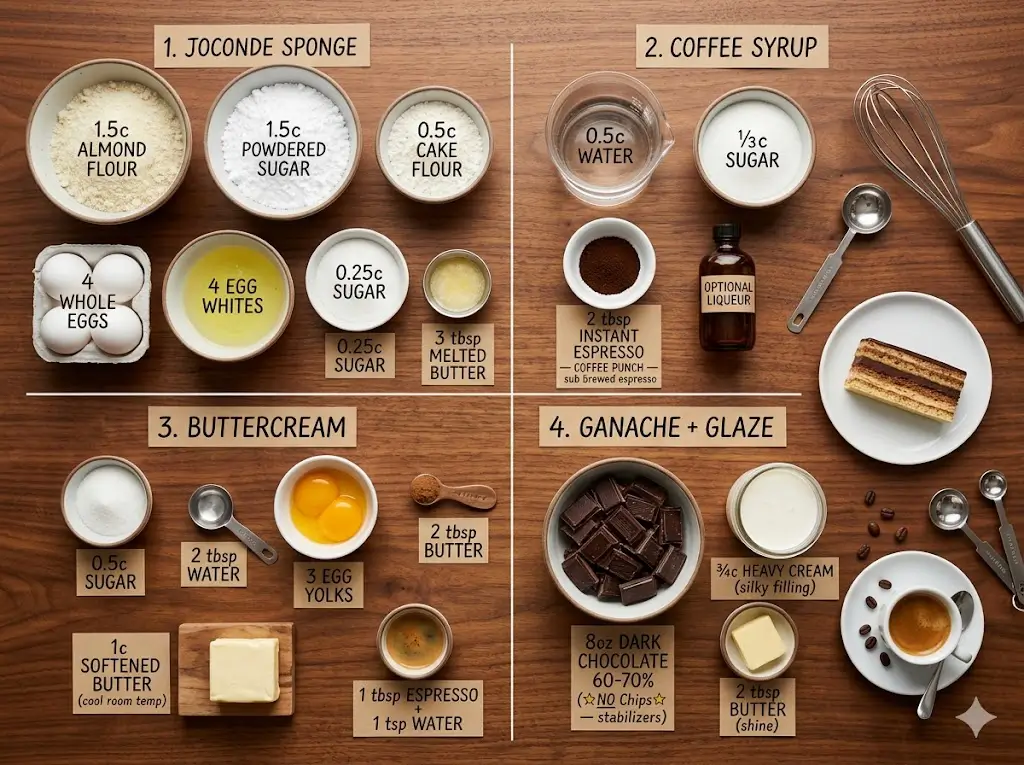
For the Almond Sponge (Biscuit Joconde):
- 1 1/2 Cups Almond Flour (Finely Ground): Provides the nutty flavor and delicate texture characteristic of French sponges. Substitution: Hazelnut flour offers a delicious, slightly deeper flavor profile.
- 1 1/2 Cups Powdered Sugar: For sweetening and structure.
- 1/2 Cup Cake Flour: Ensures a tender crumb compared to all-purpose flour.
- 4 Large Whole Eggs (Room Temperature): For binding and richness.
- 4 Large Egg Whites (Room Temperature): Whipped into a meringue to provide the essential lift and airy structure.
- 1/4 Cup Granulated Sugar: To stabilize the egg white meringue.
- 3 Tablespoons Unsalted Butter, Melted and Cooled: Adds subtle richness and moisture.
For the Coffee Soaking Syrup:
- 1/2 Cup Water
- 1/3 Cup Granulated Sugar
- 2 Tablespoons Instant Espresso Powder: Delivers the potent, concentrated coffee punch necessary to cut through the rich buttercream. Substitution: 1/2 cup of extremely strong brewed espresso can replace the water and powder.
- 1 Tablespoon Coffee Liqueur (Optional): Kahlúa or Tia Maria adds depth, though it can be omitted.
For the Coffee French Buttercream:
- 1/2 Cup Granulated Sugar
- 2 Tablespoons Water
- 3 Large Egg Yolks (Room Temperature): The base for the rich, custard-like French buttercream.
- 1 Cup (2 Sticks) Unsalted Butter, Softened: Must be at cool room temperature for proper emulsion.
- 1 Tablespoon Instant Espresso Powder (Dissolved in 1 tsp hot water): The primary flavoring agent.
For the Chocolate Ganache & Glaze:
- 8 oz High-Quality Dark Chocolate (60-70% cacao), finely chopped: The backbone of the chocolate layers; do not use chocolate chips, which contain stabilizers that prevent smooth melting.
- 3/4 Cup Heavy Cream: For creating the silky ganache filling.
- 2 Tablespoons Unsalted Butter (For the glaze): Adds the necessary shine to the final top layer.
Equipment for Baking This Recipe
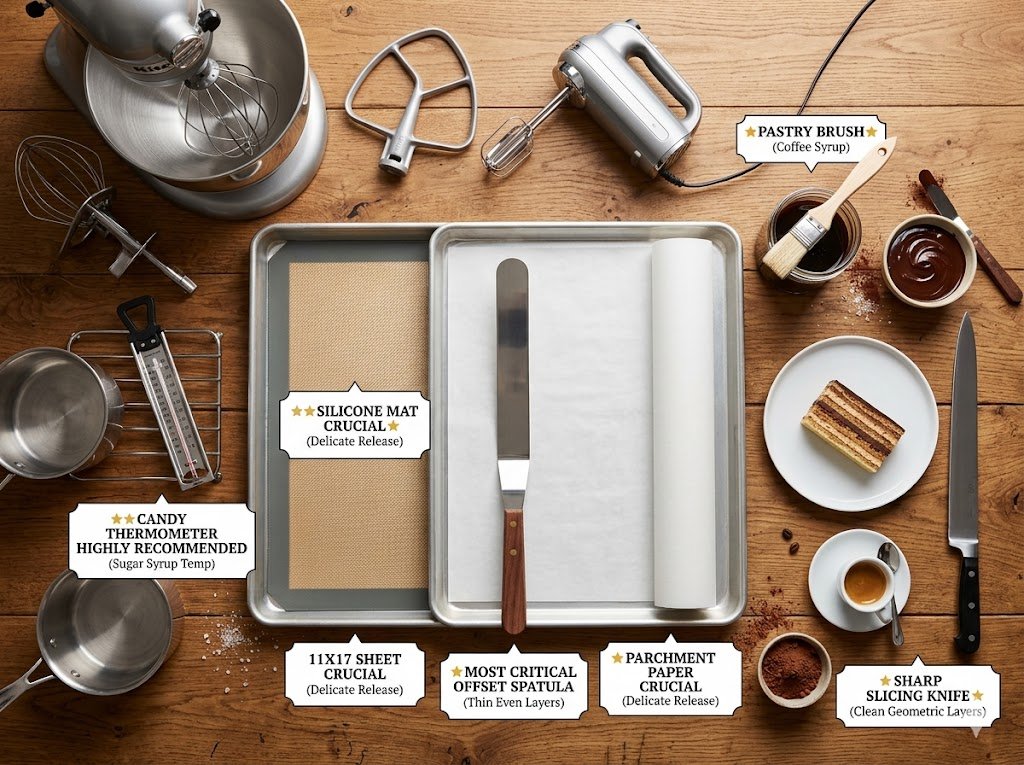
Precision is key when assembling an entremet. Having the right tools ensures those signature, distinct, razor-sharp layers.
- Two 11×17-Inch Half-Sheet Pans (or Three 8×8-Inch Square Pans): For baking the thin sheets of Joconde sponge.
- Parchment Paper or Silicone Baking Mats: Crucial for ensuring the delicate, thin sponges release perfectly without tearing.
- Stand Mixer (with Whisk Attachment) and Hand Mixer: Essential for whipping the meringue for the sponge and the egg yolks for the buttercream.
- Candy Thermometer: Highly recommended for achieving the exact temperature needed for the sugar syrup in the French buttercream.
- Offset Spatula: The most critical tool for spreading the thin, even layers of buttercream and ganache.
- Pastry Brush: For generously and evenly applying the coffee soaking syrup.
- Sharp, Long Slicing Knife: Essential for trimming the final edges to reveal the clean, geometric layers.
Timing & Workflow
An opera cake is not a spontaneous, weeknight bake; it is a planned culinary event. Breaking the process into stages over two days often yields the best results and minimizes stress, a strategy we detail in our definitive holiday showstopper guide.
- Preparation Time: 60 minutes
- Baking Time: 15 minutes (Sponges bake very quickly!)
- Assembly and Chilling Time: 4 hours (Minimum)
- Total Time: Approx. 5 hours and 15 minutes
Data Insight: While the total time commitment is significant, the actual baking time is roughly 60% less than a standard dense pound cake. The majority of the time investment lies in the precise assembly and the non-negotiable chilling periods required to set the distinct layers before cutting.
Step-by-Step Instructions
Step 1: Prepare the Coffee Syrup
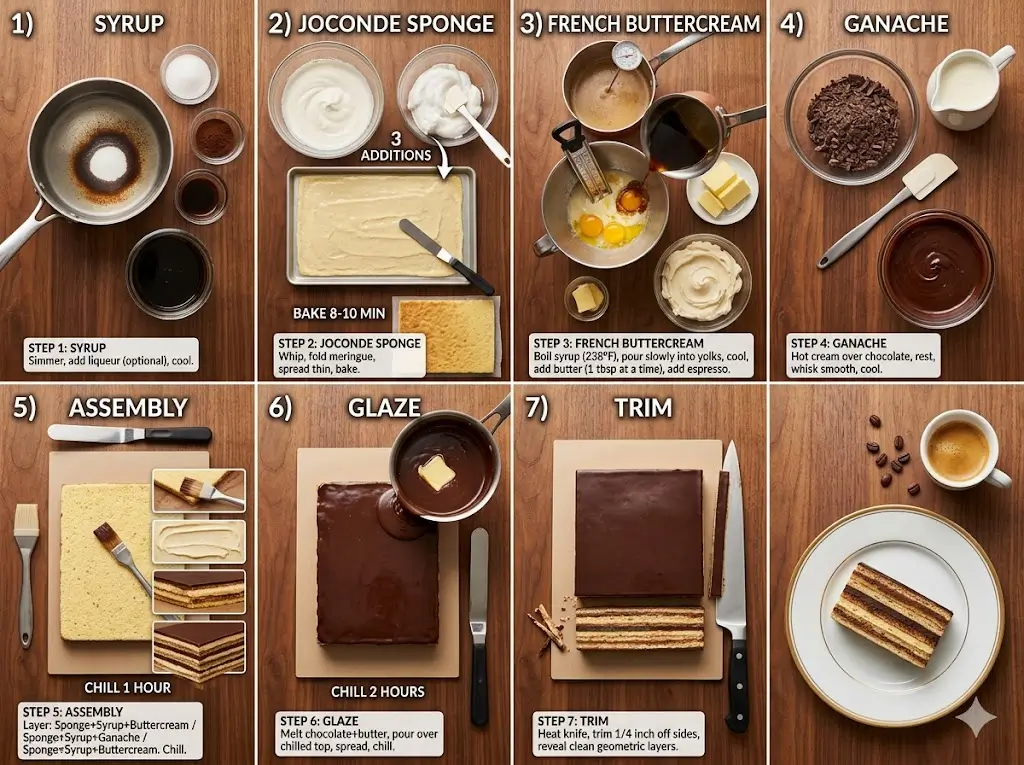
Start by making the syrup so it has time to cool completely. In a small saucepan, combine the water, granulated sugar, and instant espresso powder. Bring to a simmer over medium heat, stirring just until the sugar and coffee dissolve. Remove from the heat, stir in the optional coffee liqueur, and set aside to cool.
Step 2: Bake the Almond Sponge (Biscuit Joconde)
Preheat your oven to 400°F (200°C). Line your sheet pans with parchment paper. In your stand mixer, whip the whole eggs, almond flour, powdered sugar, and cake flour on medium-high speed for about 5 minutes until the mixture is pale, thick, and voluminous. In a separate, impeccably clean bowl, whip the egg whites to soft peaks, gradually adding the granulated sugar until stiff, glossy peaks form. Gently fold the meringue into the almond mixture in three additions, followed by folding in the melted butter. Spread the batter very thinly and evenly into your prepared pans using an offset spatula. Bake for 8-10 minutes, or until the sponge springs back when lightly touched and is slightly golden. Cool completely on wire racks.
Step 3: Create the Coffee French Buttercream
This is a classic French pâte à bombe buttercream. In a small saucepan, combine the granulated sugar and water. Boil without stirring until the syrup reaches 238°F (114°C) on a candy thermometer (soft-ball stage). Meanwhile, begin whipping the egg yolks in your stand mixer until pale and thick. With the mixer running on medium speed, carefully pour the hot sugar syrup down the side of the bowl in a slow, steady stream. Continue whipping until the mixture is completely cool to the touch (this can take 5-10 minutes). Once cool, gradually add the softened butter, one tablespoon at a time, beating until the buttercream is thick, smooth, and emulsified. Finally, whip in the dissolved espresso powder.
Step 4: Make the Chocolate Ganache Filling
Place 6 oz of the chopped dark chocolate in a heatproof bowl. In a small saucepan, heat the heavy cream until it just begins to simmer (do not boil). Pour the hot cream over the chocolate and let it sit undisturbed for 2 minutes. Gently whisk starting from the center outward until the ganache is smooth, glossy, and fully emulsified. Let it cool slightly until it thickens to a spreadable consistency (similar to mayonnaise).
Step 5: The Precise Assembly
Cut your cooled Joconde sponges into three equal rectangles (typically 8×8 or 9×9 inches, depending on your pans).
- Layer 1: Place the first sponge layer on your serving board or a flat baking sheet. Brush it generously with the coffee syrup. Spread half of the coffee buttercream in a smooth, even layer over the soaked sponge.
- Layer 2: Place the second sponge layer on top, pressing gently. Soak generously with coffee syrup. Spread the entire chocolate ganache filling evenly over this layer. Chill for 10 minutes to set the ganache slightly.
- Layer 3: Place the final sponge layer on top. Soak with the remaining coffee syrup. Spread the remaining coffee buttercream over the top in the smoothest, most perfectly level layer possible. Chill the entire cake for at least 1 hour, or until the top buttercream layer is completely firm.
Step 6: Prepare and Apply the Chocolate Glaze
For the final shiny glaze, melt the remaining 2 oz of chopped chocolate and 2 tablespoons of butter together (either over a double boiler or in short bursts in the microwave). Stir until completely smooth and glossy. Pour the warm glaze over the chilled, firm top layer of buttercream, using an offset spatula to spread it quickly and evenly across the entire surface. Chill the cake for at least 2 more hours to allow all the layers to set firmly.
Step 7: The Final Trim
To achieve the distinct, professional look of a true opera cake, you must trim the edges. Heat your sharp, long slicing knife under hot running water, wipe it completely dry, and slice about 1/4 inch off each side of the chilled cake to reveal the beautiful, clean geometric layers inside. Wipe the knife clean between every single cut.
Nutritional Information
An opera cake is designed to be incredibly rich and intense; a small slice is highly satisfying. Based on a standard yield of 12 elegant rectangular servings, a nutritional breakdown reveals the following per-serving averages:
- Calories: 380 kcal
- Total Fat: 26g (Saturated Fat: 14g)
- Total Carbohydrates: 32g
- Dietary Fiber: 2g
- Total Sugars: 24g
- Protein: 6g
- Sodium: 45mg
Data Insight: The relatively high protein content (6g) for a dessert comes directly from the heavy use of almond flour and eggs in the Joconde sponge. The intense concentration of dark chocolate and coffee flavor means this dessert triggers satiety much faster than lighter, sweeter cakes, making smaller, elegant portions the ideal serving size.
Healthier Alternatives for the Recipe
Modifying an entremet that relies on precise fat-to-sugar ratios is challenging, but subtle adjustments can make it slightly lighter while preserving its architectural integrity.
- Refined Sugar Reduction: The granulated sugar in the coffee syrup and the sponge can be partially replaced with a 1:1 baking alternative like a granulated monk fruit blend or erythritol to reduce the overall glycemic impact.
- Dairy Modifications: While true French buttercream requires butter, you can experiment with a robust dairy-free butter alternative for the frosting and use a high-fat coconut cream or oat milk cream in place of the heavy cream for the ganache to make the dessert largely dairy-free.
- Decaf Option: If caffeine sensitivity is an issue, simply substitute a high-quality decaffeinated instant espresso powder in both the syrup and the buttercream to maintain the robust flavor profile without the jittery effects.
For more inspiration on adapting classic recipes to modern dietary preferences, explore our insights in the 2025 cake trend report.
Serving Suggestions
The opera cake is already a visual masterpiece, so plating should be elegant and minimalist to let the clean, distinct layers shine. Drawing on ideas from creative cake pairings, here are a few ways to present your creation:
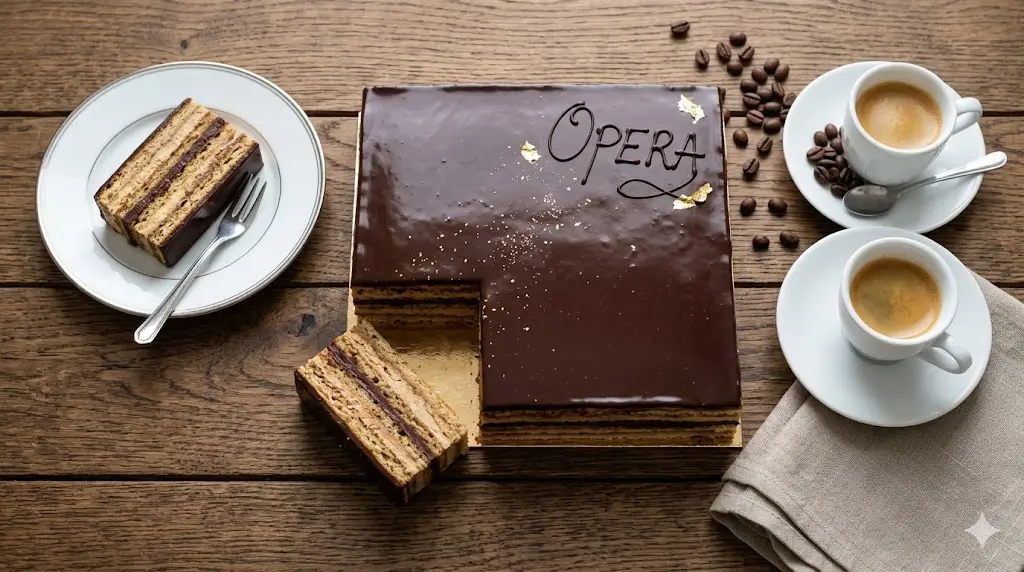
- The Classic Patisserie Presentation: Serve the clean-cut rectangular slices on a stark white or matte black plate. Garnish the top glaze simply with a single piece of edible gold leaf or an elegant chocolate curl.
- The High-Tea Pairing: Because of its intense richness, serve thin slices alongside a pot of Earl Grey tea or a bright, acidic, non-creamy beverage to cleanse the palate between bites.
- The Dramatic Finish: For a modern twist, plate the slice atop a subtle smear of unsweetened raspberry coulis. The sharp, fruity acidity cuts through the heavy coffee and chocolate fats beautifully.
Common Mistakes to Avoid
When undertaking a multi-step pastry project, understanding the potential pitfalls is crucial for success.
- Pitfall 1: Skimping on the Soaking Syrup. The Reality: The Joconde sponge is inherently slightly dry because it contains very little fat. It is designed specifically to act as a thirsty sponge for the potent syrup. Do not be timid; ensure every square inch of the layers is thoroughly saturated, or the finished cake will taste dry and crumbly.
- Pitfall 2: Rushing the Chill Times. The Science: The distinct, sharp layers are the hallmark of an opera cake. If you spread the warm chocolate ganache over soft buttercream, the layers will bleed into a muddy, brown mess. You must allow each layer to set up and firm completely in the refrigerator before adding the next component. Patience is a required ingredient.
- Pitfall 3: Not Wiping the Knife During Slicing. The Experiential Advice: After investing hours into perfecting your layers, do not ruin the presentation at the very end. Slicing through the cold cake with a dirty knife will smear the dark chocolate glaze down through the pale buttercream layers. Heat the blade, wipe it dry, make one clean slice, and thoroughly wipe the blade clean again before the next cut.
Storing Tips for the Recipe
Because of the butter-heavy frosting and the chocolate ganache, this dessert requires specific handling to maintain its texture and appearance.
- Refrigeration: The opera cake must be stored in the refrigerator. Keep it in an airtight container to prevent the fats in the buttercream and chocolate from absorbing ambient odors from the fridge. It will keep exceptionally well for up to 4 days; in fact, many bakers find the flavors meld and deepen on the second day.
- Serving Temperature: While it must be stored cold, it should never be served straight from the fridge. The French buttercream will be hard and waxy when cold. Allow the slices to sit at room temperature for 15-20 minutes before serving so the buttercream softens slightly and the flavors open up on the palate.
- Freezing: For long-term storage, this cake freezes beautifully. Wrap the uncut, fully assembled, and glazed cake (or individual slices) tightly in plastic wrap and freeze for up to 2 months. Thaw overnight in the refrigerator before bringing to room temperature for serving. This makes it an ideal candidate for advance preparation, as discussed in our small-batch baking handbook.
Conclusion
The opera cake is the ultimate expression of sophisticated French pastry—a harmonious, perfectly balanced architecture of delicate almond sponge, potent espresso syrup, rich French buttercream, and silky dark chocolate. While it requires patience and precision, breaking it down into distinct, manageable steps makes this impressive entremet entirely achievable for the dedicated home baker.
Are you ready to elevate your pastry skills and tackle this Parisian masterpiece? We encourage you to try the recipe, share your baking journey in the review section, or leave a comment on our blog detailing your experience! Don’t forget to subscribe for more advanced tutorials and data-driven baking insights.
Opera Cake: How To Make The Best 6-Layer French Dessert
Ingredients
Equipment
Method
Step 1: Prepare the Coffee Syrup
Start by making the syrup so it has time to cool completely. In a small saucepan, combine the water, granulated sugar, and instant espresso powder. Bring to a simmer over medium heat, stirring just until the sugar and coffee dissolve. Remove from the heat, stir in the optional coffee liqueur, and set aside to cool.Step 2: Bake the Almond Sponge (Biscuit Joconde)
Preheat your oven to 400°F (200°C). Line your sheet pans with parchment paper. In your stand mixer, whip the whole eggs, almond flour, powdered sugar, and cake flour on medium-high speed for about 5 minutes until the mixture is pale, thick, and voluminous. In a separate, impeccably clean bowl, whip the egg whites to soft peaks, gradually adding the granulated sugar until stiff, glossy peaks form. Gently fold the meringue into the almond mixture in three additions, followed by folding in the melted butter. Spread the batter very thinly and evenly into your prepared pans using an offset spatula. Bake for 8-10 minutes, or until the sponge springs back when lightly touched and is slightly golden. Cool completely on wire racks.Step 3: Create the Coffee French Buttercream
This is a classic French pâte à bombe buttercream. In a small saucepan, combine the granulated sugar and water. Boil without stirring until the syrup reaches 238°F (114°C) on a candy thermometer (soft-ball stage). Meanwhile, begin whipping the egg yolks in your stand mixer until pale and thick. With the mixer running on medium speed, carefully pour the hot sugar syrup down the side of the bowl in a slow, steady stream. Continue whipping until the mixture is completely cool to the touch (this can take 5-10 minutes). Once cool, gradually add the softened butter, one tablespoon at a time, beating until the buttercream is thick, smooth, and emulsified. Finally, whip in the dissolved espresso powder.Step 4: Make the Chocolate Ganache Filling
Place 6 oz of the chopped dark chocolate in a heatproof bowl. In a small saucepan, heat the heavy cream until it just begins to simmer (do not boil). Pour the hot cream over the chocolate and let it sit undisturbed for 2 minutes. Gently whisk starting from the center outward until the ganache is smooth, glossy, and fully emulsified. Let it cool slightly until it thickens to a spreadable consistency (similar to mayonnaise).Step 5: The Precise Assembly
Cut your cooled Joconde sponges into three equal rectangles (typically 8×8 or 9×9 inches, depending on your pans).Layer 1: Place the first sponge layer on your serving board or a flat baking sheet. Brush it generously with the coffee syrup. Spread half of the coffee buttercream in a smooth, even layer over the soaked sponge.Layer 2: Place the second sponge layer on top, pressing gently. Soak generously with coffee syrup. Spread the entire chocolate ganache filling evenly over this layer. Chill for 10 minutes to set the ganache slightly.Layer 3: Place the final sponge layer on top. Soak with the remaining coffee syrup. Spread the remaining coffee buttercream over the top in the smoothest, most perfectly level layer possible. Chill the entire cake for at least 1 hour, or until the top buttercream layer is completely firm.Step 6: Prepare and Apply the Chocolate Glaze
For the final shiny glaze, melt the remaining 2 oz of chopped chocolate and 2 tablespoons of butter together (either over a double boiler or in short bursts in the microwave). Stir until completely smooth and glossy. Pour the warm glaze over the chilled, firm top layer of buttercream, using an offset spatula to spread it quickly and evenly across the entire surface. Chill the cake for at least 2 more hours to allow all the layers to set firmly.Step 7: The Final Trim
To achieve the distinct, professional look of a true opera cake, you must trim the edges. Heat your sharp, long slicing knife under hot running water, wipe it completely dry, and slice about 1/4 inch off each side of the chilled cake to reveal the beautiful, clean geometric layers inside. Wipe the knife clean between every single cut.