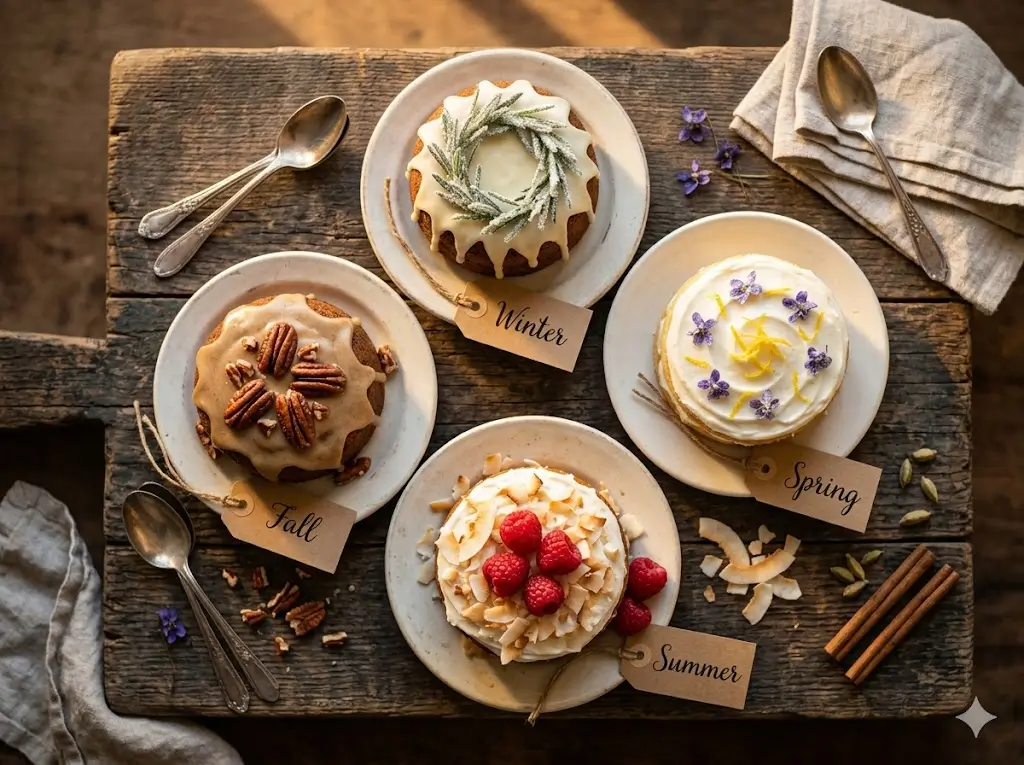
Step 1: Equipment Preparation and Oven Calibration
Do not underestimate the importance of an accurate oven. Preheat your oven to 350°F (175°C), verifying the temperature with an independent internal oven thermometer. Prepare a 9-inch (23cm) springform pan by brushing the interior generously with olive oil and lining the bottom with a perfectly cut circle of parchment paper. The springform pan is vital because fruit-heavy cakes are often too delicate to invert directly out of standard cake tins.Step 2: Preparing the Seasonal Harvest
Take 10 minutes to properly process your seasonal produce. If you are baking in the summer, gently wash your berries and pat them completely dry with paper towels; excess water will turn the batter soggy. Toss them in a light dusting of flour. If baking in autumn, peel and dice your apples uniformly to ensure they bake at the exact same rate. Place your prepared fruit in a separate bowl and set it aside.Step 3: Whisking the Dry Foundation
In a large, wide mixing bowl, combine the 2 cups of all-purpose flour, 1 ½ teaspoons of baking powder, ½ teaspoon of baking soda, and 1 teaspoon of fine sea salt. Use a balloon whisk to vigorously aerate the ingredients for at least 30 seconds. This ensures the leavening agents are perfectly distributed, preventing uneven rising or localized bitter pockets of baking soda in the final crumb.Step 4: Emulsifying the Wet Ingredients
In a separate medium bowl, combine the 1 cup of extra virgin olive oil, 1 cup of whole milk Greek yogurt, 1 ½ cups of granulated sugar, the 3 room-temperature eggs, and the vanilla bean paste. Use a whisk to beat these ingredients together vigorously for 2 full minutes. Actionable Tip: You are looking for a state of emulsion where the oil is completely suspended in the water content of the yogurt and eggs. The mixture should look significantly paler, slightly thickened, and perfectly homogenous.Step 5: The Gentle Incorporation
Pour the wet emulsified mixture directly into the center of the dry flour mixture. Switch to a flexible silicone spatula. Gently fold the ingredients together using a figure-eight motion, scraping the bottom and sides of the bowl. Stop folding when there are still a few visible, small streaks of flour remaining. Actionable Tip: Overmixing develops gluten, which will turn your tender fruit cake into a dense, chewy loaf. Less is always more at this stage.Step 6: Integrating the Seasonal Produce
Take 1 ½ cups of your chosen seasonal fruit and gently fold it into the batter. Use only three or four sweeping folds to distribute the fruit without crushing it and bleeding its juices into the batter (which can turn the crumb gray, especially with blueberries). Reserve the remaining ½ cup of fruit for the top.Step 7: Layering and Crowning the Cake
Pour the thick, fruit-studded batter into your prepared 9-inch springform pan. Use an offset spatula to smooth the surface, pushing the batter slightly higher at the edges than in the middle (this helps counteract the natural doming effect in the oven). Artfully arrange the remaining ½ cup of seasonal fruit over the top of the batter. Sprinkle the entire surface with 2 tablespoons of coarse turbinado or Demerara sugar to create a beautiful, crunchy, bakery-style crust.Step 8: The Baking Process
Place the pan on the middle rack of your calibrated oven. Bake for 45 to 55 minutes. Because oven temperatures and fruit moisture levels vary drastically, begin checking the cake at the 40-minute mark. The cake is perfectly baked when the top is a deep golden brown, the edges have slightly pulled away from the pan, and a wooden skewer inserted into the center comes out clean or with a few moist (not wet) crumbs attached.Step 9: The Critical Cooling Phase
Remove the cake from the oven and place the springform pan on a wire cooling rack. Do not attempt to unbuckle the pan immediately. The hot fruit juices have softened the crumb, and releasing the tension too early will cause the cake to fracture. Let it cool in the pan for exactly 30 minutes.Step 10: Unmolding and Final Presentation
After 30 minutes, carefully run a thin, flexible butter knife around the inside edge of the pan to release any caramelized fruit or sugar that may have stuck to the sides. Gently unbuckle and remove the outer ring. Allow the cake to cool completely on the wire rack before slicing. Garnish with a light dusting of powdered sugar just before serving.