Ingredients
Method
Step 1: Preheat and Pan Prep
Preheat your oven to 350°F (175°C). Line an 8x4 inch loaf pan with parchment paper, leaving a generous overhang on the long sides for easy removal later.Step 2: The Zest Infusion Technique (Critical Step)
In your large mixing bowl, combine the lemon zest and maple syrup before adding anything else. Use a whisk or the back of a spoon to vigorously rub and press the zest into the syrup for about 30-45 seconds.Step 3: Emulsify the Wet Ingredients
Add the eggs, Greek yogurt, olive oil, lemon juice, and vanilla to the zest-syrup mixture. Whisk vigorously for 1-2 minutes.Step 4: Whisk the Dry Ingredients
In a separate medium bowl, whisk together the almond flour, oat flour, baking powder, baking soda, and salt.Step 5: The Gentle Fold
Pour the dry ingredients into the wet mixture. Switch to a silicone spatula. Fold the dry ingredients into the wet just until combined.Step 6: Bake to Perfection
Pour the batter into the prepared loaf pan and smooth the top with your spatula. Bake on the center rack for 35–45 minutes.Step 7: The Essential Cool Down
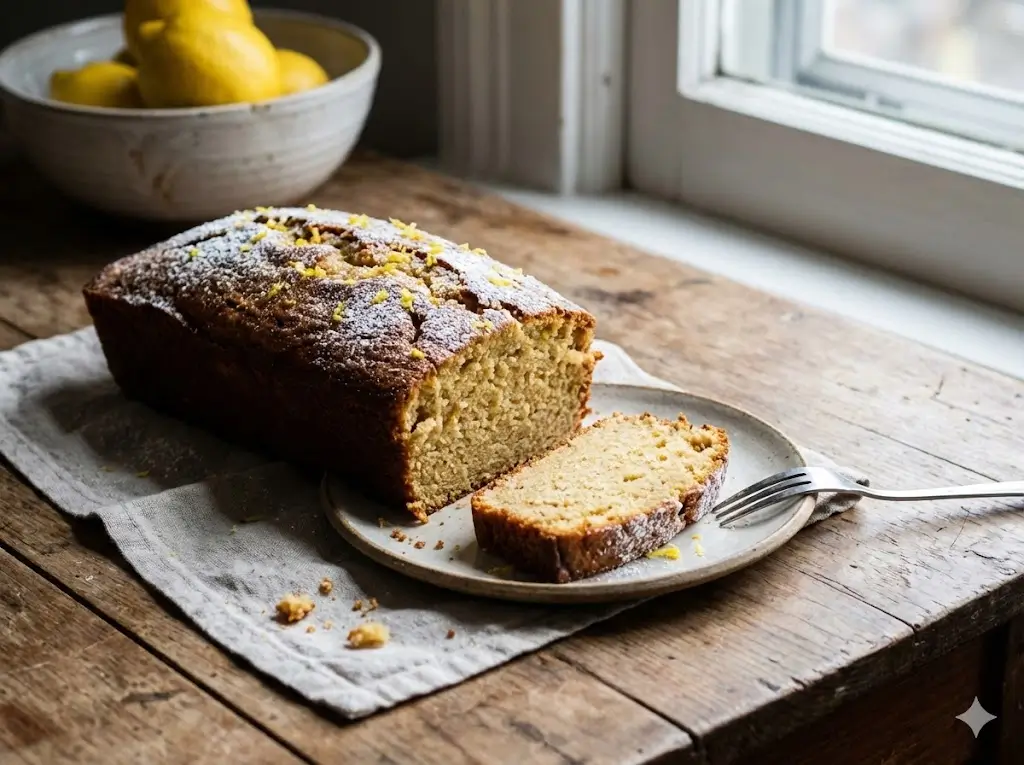
Let the cake cool in the pan for 10-15 minutes. Then, using the parchment handles, lift it out and transfer it to a wire rack to cool completely.Pro Tip: Lightly rub a drop of olive oil on the pan before placing the paper. This acts as glue, keeping the parchment from sliding around while you pour the batter.Why this works: You are performing a flavor extraction. The friction releases the essential lemon oils directly into the sweetener, ensuring the citrus flavor permeates every single crumb rather than getting lost in the flour.Visual Cue: You are looking for an emulsion. The mixture should transform from separated liquids into a cohesive, pale yellow, glossy liquid that looks slightly thickened.Tip: Ensure there are no lumps in the almond flour. If your almond flour is clumpy, sift it. Clumps of flour will result in dry pockets in the baked cake.Actionable Advice: Stop mixing immediately once the flour streaks disappear. Over-mixing almond flour can release its natural oils, leading to a greasy, heavy cake. The batter will be slightly thicker than a traditional cake batter—this is normal.Doneness Test: At the 35-minute mark, insert a toothpick into the center. It should come out with a few moist crumbs attached, but no wet batter. If the top is browning too fast but the center is raw, tent the pan loosely with aluminum foil.Warning: Do not slice it while hot! Gluten-free and almond flour cakes are more fragile when warm. They need to cool for the internal structure to set, otherwise, they may crumble.
Notes
Title
Thumbnail


Price
$89.99
$71.12
$31.49
More information
Title
Thumbnail
Price
$89.99
More information
Title
Thumbnail
Price
$71.12
More information
Title
Thumbnail
Price
$31.49
More information