- 4 Cups High-Quality Sifted Powdered Sugar
- 2 Cups Unsalted European-Style Butter
- 3–4 Tablespoons Heavy Cream
- 1 Tablespoon Pure Vanilla Bean Paste
- A Pinch of Fine Sea Salt
- The "Secret" Tool: A Rotating Turntable
- The Bench Scraper and Offset Spatula
Step 1: Leveling and The "Foundation" Crumb Coat
The first step in how to frost a cake is ensuring your canvas is flat. Use a serrated knife to shave off the domed tops of your cake layers. Once stacked, apply a paper-thin layer of frosting over the entire exterior. This is called the "Crumb Coat." It acts as a sealant, trapping any loose cake particles so they don't migrate into your final pristine layer.Step 2: The Thermal Set (The Chilling Secret)
Place your crumb-coated cake in the refrigerator for at least 30 minutes. This is the stage that separates amateurs from pros. You want the crumb coat to be "firm to the touch." This provides a solid, non-moving base for your final layer.Step 3: The "Excess" Application
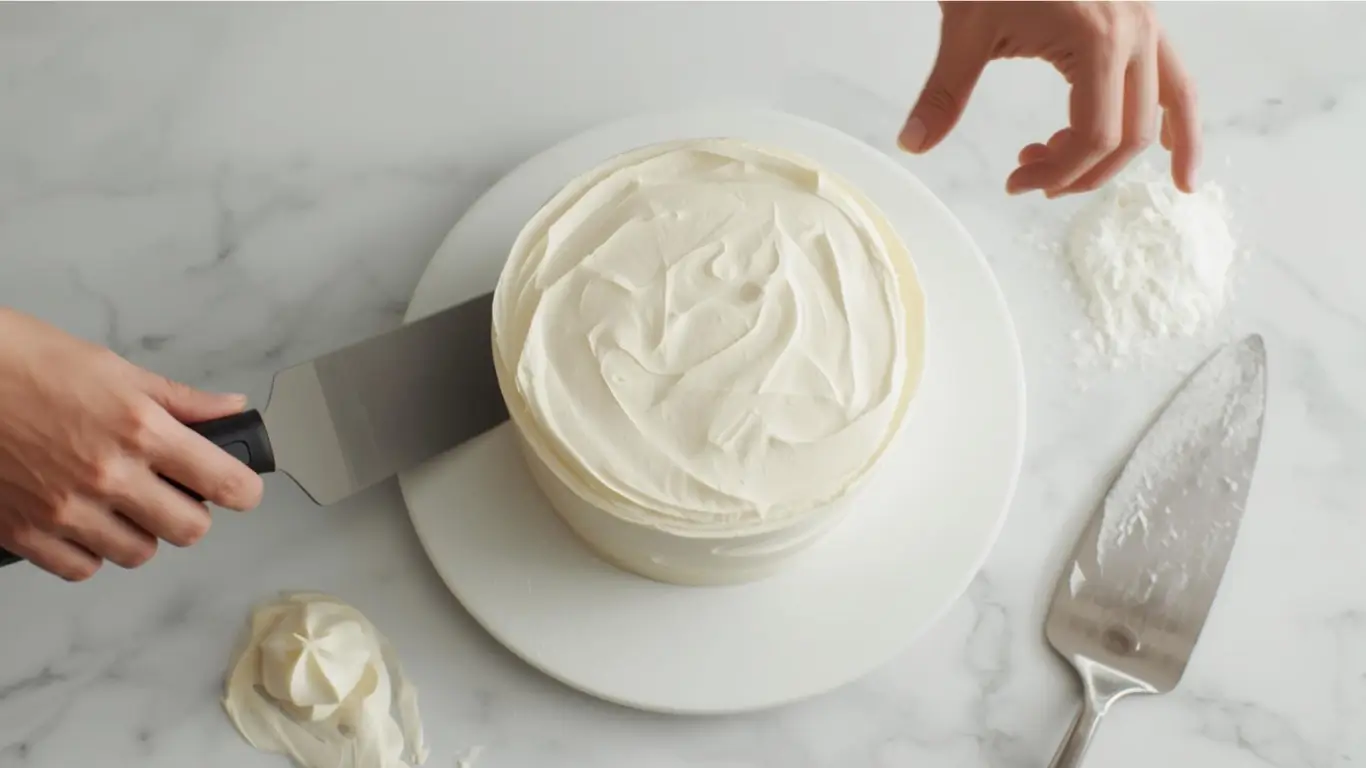
Remove the cake from the fridge. Apply a very generous amount of frosting to the top and sides—much more than you think you need. Using your offset spatula, spread it roughly. The goal here isn't smoothness yet; it's total coverage with a thickness of about 1/4 inch.Step 4: The Bench Scraper Polish
This is the definitive moment in how to frost a cake. Hold your bench scraper at a 45-degree angle against the side of the cake. Keep the scraper perfectly still while you rotate the turntable with your other hand. Do not pull the scraper away until you have completed a full 360-degree rotation.Pro Tip: Don't worry about how this looks; it’s meant to be ugly! Think of it as the "primer" on a wall before the final paint.Insight: Chilling the cake stabilizes the internal fats, preventing the tiers from shifting while you apply the pressure needed for a smooth finish.Personalized Trick: If your frosting feels too stiff, warm your offset spatula under hot water for 5 seconds and wipe it dry before spreading. The residual heat will slightly soften the outer "skin" of the frosting for better glide.Actionable Tip: Any "holes" or gaps that appear after the first pass should be filled with a tiny bit more frosting and then scraped again. For the top edges, use your offset spatula to gently "pull" the excess frosting from the outer edge toward the center.