Ingredients
Equipment
Method
Step 1: Meticulous Pan Preparation
Preheat your oven to 350°F (175°C). The oven must be fully heated before the batter is ready. Grease the sides of your two 8-inch cake tins lightly with butter and line the bottoms with a circle of parchment paper. Do not heavily grease the sides, as the batter needs to cling to the tin slightly to climb and rise.Step 2: The Crucial Ribbon Stage
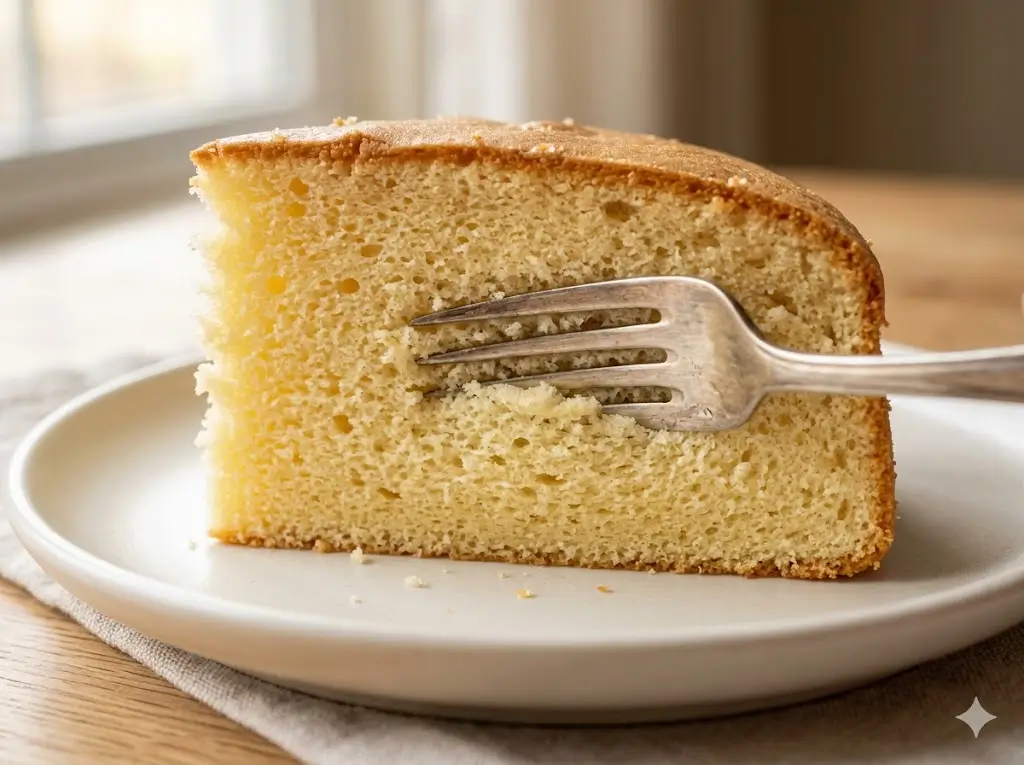
In your stand mixer or a large bowl, combine the 4 room-temperature eggs and the 1 cup of caster sugar. Whisk on high speed for 5 to 8 minutes. The mixture should transform from a dark yellow liquid into a thick, pale, voluminous foam. When you lift the whisk, the batter should fall in a thick ribbon that sits on the surface of the mixture for a few seconds before dissolving. This is the foundation of your bake. For a deep dive into the science of mixing stages, review our cake baking formulas and ratios.Step 3: Flavor Incorporation
Once the ribbon stage is achieved, gently whisk in the 1 teaspoon of pure vanilla extract on the lowest possible speed just until combined.Step 4: The Art of Sifting and Folding
Sift the cake flour and salt together. Take your fine mesh sieve and sift one-third of the flour mixture directly over the aerated eggs. Using your silicone spatula, gently fold the flour into the eggs. Cut down the center, scrape the bottom, and lift the batter over itself, rotating the bowl as you go. Repeat with the remaining flour in two more batches. Do not stir. Stirring will deflate the eggs. To perfect your folding technique, consult our cake baking tips and techniques.Step 5: Incorporating the Fat (Optional)
If you are using the ¼ cup of melted and cooled butter, do not pour it directly into the main bowl. Instead, scoop about one cup of your batter into the bowl of melted butter and fold them together until combined. Then, gently fold this butter-heavy mixture back into your main batter. This prevents the heavy fat from instantly deflating the entire bowl of airy batter.Step 6: Baking to Golden Perfection
Immediately divide the batter evenly between your prepared cake tins. Smooth the tops very gently. Bake on the middle rack for 25 to 30 minutes. The cakes are done when they are golden brown, spring back when lightly touched in the center, and have just started to pull away from the sides of the tins.Step 7: The Vital Cooling Process
Remove the tins from the oven and let them cool on a wire rack for 5 minutes. Carefully run a thin knife around the edges, then turn the cakes out onto the wire rack. Peel off the parchment paper and let them cool completely before decorating.