Go Back
bundt cake recipes 7 best tips for perfect baking success

bundt cake recipes 7 best tips for perfect baking success

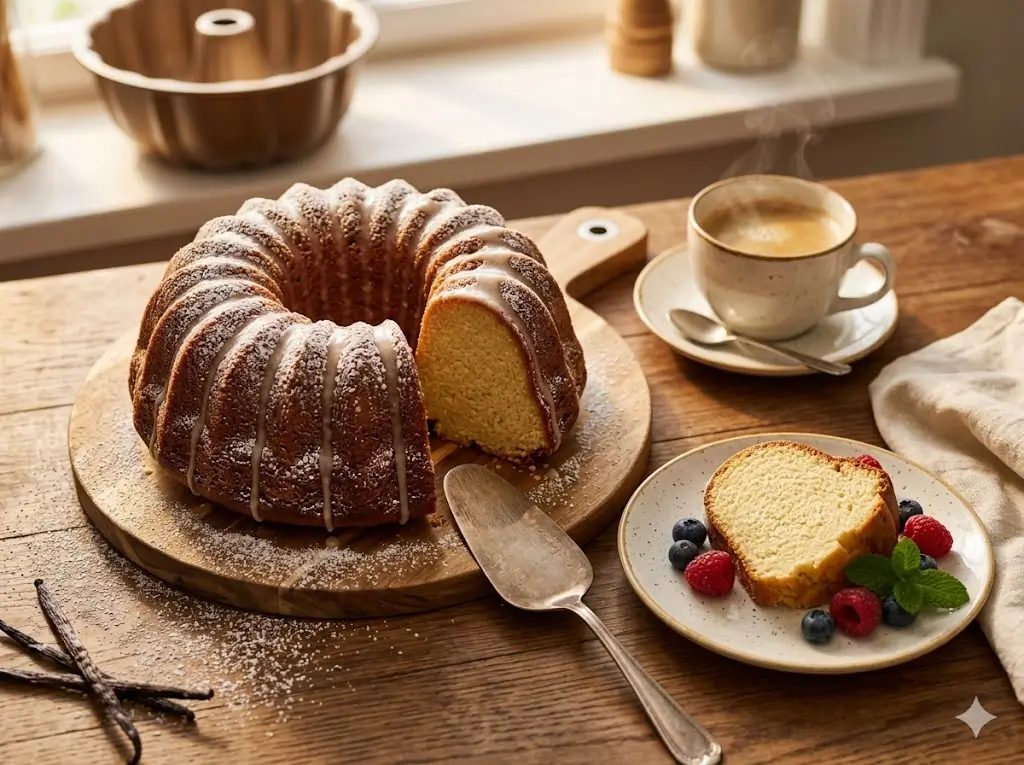
Struggling with dry cakes or sticky pans? Master the best bundt cake recipes with our ultimate vanilla pound cake guide. Stop stressing and start baking. Discover how!

Prep Time 15 minutes
Cook Time 30 minutes
20 minutes
Total Time 1 hour 5 minutes
Servings: 4 people
Course: Dessert
Cuisine: American
Calories: 285

Ingredients
  

All-Purpose Flour: 3 cups, spooned and leveled. This provides the ideal structural framework. For a slightly more tender crumb, you can substitute half of this with cake flour.Granulated Sugar: 2 cups. Sugar does not just sweeten; it hydro-locks moisture into the crumb and creates that gorgeous, slightly crisp outer crust.Unsalted Butter: 1 cup (2 sticks), softened to room temperature. Using European-style butter with a higher fat content yields an incomparably rich, milky flavor.Large Eggs: 4 whole eggs, strictly at room temperature, to emulsify beautifully into the batter without breaking the creamed butter.Buttermilk: 1 cup, room temperature. The acidity in thick, cultured buttermilk tenderizes the gluten and reacts with the leavening agents for a plush texture. If unavailable, mix 1 cup of whole milk with 1 tablespoon of white vinegar and let it sit for 5 minutes.Pure Vanilla Extract: 1 tablespoon. Because vanilla is the star profile, avoid artificial essences and opt for pure extract or vanilla bean paste for those beautiful aromatic flecks.Baking Powder: 1 teaspoon to give the dense batter a gentle, elegant lift.Salt: 0.5 teaspoons of fine sea salt to cut through the sweetness and elevate the buttery notes.
Equipment

  • 10-to-12 Cup Heavy Cast Aluminum Bundt Pan: Lighter pans often lead to uneven browning and overbaked edges. A heavy, intricate pan conducts heat evenly. Stand Mixer or Powerful Hand Mixer: Crucial for achieving the maximum aeration during the creaming stage. Silicone Pastry Brush: The absolute best tool for getting grease into every tiny crevice of your pan.Large Silicone Spatula: For scraping down the bowl and ensuring no dense butter pockets hide at the bottom. Wire Cooling Rack: Essential for stopping the baking process and allowing air to circulate around the freshly turned-out cake.

Method
 

  1. Step 1: Pan Preparation Masterclass

    Preheat your oven to 350°F (175°C). The single most important step in any molded bake is pan preparation. Do not use standard cooking spray, as the lecithin can bake onto the pan and create a sticky residue over time. Instead, melt 2 tablespoons of vegetable shortening and use your silicone pastry brush to paint the inside of the pan meticulously, ensuring every groove and the center tube is coated. Dust lightly with flour, tapping out the excess.

    Step 2: The Creaming Method

    In the bowl of your stand mixer fitted with the paddle attachment, beat the softened butter on medium speed for 1 minute until creamy. Gradually pour in the granulated sugar. Beat this mixture on medium-high speed for a full 5 minutes until it is pale yellow, fluffy, and visibly increased in volume. This mechanical leavening is what creates a melt-in-your-mouth texture. Skipping this step is a common error seen when people move away from the ultimate guide to heirloom retro cakes.

    Step 3: Emulsifying the Eggs

    Reduce the mixer speed to medium-low. Add the room-temperature eggs one at a time, allowing each egg to fully incorporate before adding the next. Stop the mixer halfway through to scrape down the sides and bottom of the bowl with your silicone spatula. Stir in the pure vanilla extract.

    Step 4: Alternating Dry and Wet Ingredients

    In a separate medium bowl, whisk together the flour, baking powder, and salt. With the mixer on the lowest possible speed, add the dry ingredients in three additions, alternating with the buttermilk in two additions (start and end with the flour). Mix only until the last streak of flour disappears. Overmixing develops the gluten and results in a tough, rubbery crumb—a principle heavily emphasized in mastering the art of traditional layer cakes.

    Step 5: Baking and the Crucial Turn-Out

    Spoon the thick batter into your prepared pan, smoothing the top with your spatula. Tap the pan firmly on the counter three times to dislodge any trapped air bubbles. Bake on the middle rack for 55 to 65 minutes, or until a long wooden skewer inserted into the center comes out clean or with a few moist crumbs. Remove from the oven and place the pan on a wire rack for exactly 10 minutes. Set a timer! After 10 minutes, place the wire rack over the top of the pan, hold tightly, and confidently invert. Slowly lift the pan away to reveal your masterpiece.