Go Back
healthy cake recipes low calories 7 best tips

healthy cake recipes low calories 7 best tips

Craving dessert but watching your weight? Bake healthy cake recipes low calories that taste amazing. Cut sugar and fat easily without losing flavor. Try today.

Prep Time 15 minutes
Cook Time 30 minutes
15 minutes
Total Time 1 hour
Servings: 4 people
Course: Dessert
Cuisine: American
Calories: 250

Ingredients
  

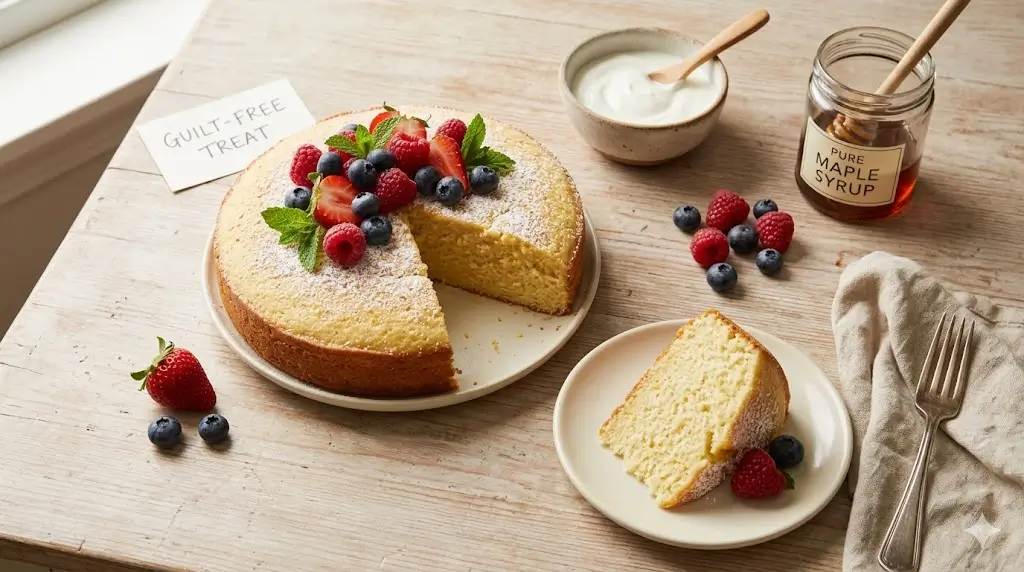
Oat Flour (1.5 cups): This provides a tender, slightly nutty base. Oat flour is lower in calories than traditional wheat flour and is packed with soluble fiber to keep you feeling full and energized.Almond Flour (0.5 cups): A touch of finely ground blanched almond flour adds essential healthy fats that replicate the rich mouthfeel of butter, effectively preventing the cake from becoming too dry during the baking process.Zero-Calorie Sweetener (3/4 cup): A granulated monk fruit and erythritol blend works absolute wonders here. It measures 1:1 like traditional sugar, browns slightly in the oven, and leaves virtually no bitter chemical aftertaste.Unsweetened Applesauce (1/2 cup): This is the ultimate baking fat replacer. It injects vital moisture and a subtle underlying sweetness into the crumb without the heavy caloric load of canola oil or melted butter.Non-Fat Greek Yogurt (1/2 cup): Adding yogurt provides a slight, pleasant tang similar to buttermilk, while simultaneously boosting the protein content and creating a rich, velvety texture in the wet batter.Egg Whites (3 large): Using egg whites instead of whole eggs completely cuts out the cholesterol and fat from the yolk while providing the necessary protein structure and lift to keep the cake airy.Unsweetened Almond Milk (1/3 cup): This thins the batter to the perfect pourable consistency for just 10 calories per cup.Vanilla Extract (2 teaspoons): Do not skimp on this ingredient. A high-quality, pure vanilla extract provides the deep, aromatic profile that tricks the palate into perceiving richness and decadence.Baking Powder (2 teaspoons) and Baking Soda (1/2 teaspoon): These are the critical leavening agents responsible for a light, airy rise in the absence of traditional creaming methods.Sea Salt (1/2 teaspoon): Essential for balancing the sweetness and sharply enhancing the vanilla notes.
Equipment

  • 8-Inch Round Cake Pan: A light-colored aluminum pan is ideal because it prevents the delicate edges of the cake from over-browning before the center cooks through. Parchment Paper: This is absolutely essential for a clean release, as low-fat cakes are significantly more prone to sticking to the pan.Digital Kitchen Scale: Volume measurements (using cups) for alternative flours like oat and almond can be highly inaccurate. Weighing your ingredients guarantees the perfect texture every single time. Large and Medium Mixing Bowls: Necessary for keeping wet and dry ingredients completely separate before the final, gentle mix.Silicone Spatula: Perfect for gently folding the batter without deflating the precious air whipped into the wet ingredients. Wire Cooling Rack: This allows cool air to circulate completely around the baked cake, preventing steam from building up and creating a soggy bottom.

Method
 

  1. Step 1: Prep and Preheat

    Begin by preheating your oven to 350°F (175°C). Proper oven temperature from the very start is crucial for the leavening agents to activate immediately upon entering the heat. Spray your 8-inch round cake pan lightly with a high-quality non-stick cooking spray, then line the bottom with a perfectly cut circle of parchment paper. This double-layer of protection ensures your delicate, low-fat cake releases flawlessly after baking.

    Step 2: Mixing the Dry Ingredients

    In your medium mixing bowl, vigorously whisk together the oat flour, almond flour, granulated zero-calorie sweetener, baking powder, baking soda, and sea salt. Whisking not only distributes the leavening agents evenly—preventing lopsided baking—but also physically breaks up any dense clumps in the almond flour, ensuring a smooth, refined crumb structure.

    Step 3: Blending the Wet Ingredients

    In your large mixing bowl, combine the unsweetened applesauce, non-fat Greek yogurt, liquid egg whites, unsweetened almond milk, and pure vanilla extract. Use a wire whisk to beat these ingredients together until completely smooth and homogenous. The mixture should look slightly pale and frothy. The acidity in the Greek yogurt is actively preparing to react with the baking soda, which will ultimately give the cake its signature lift.

    Step 4: Combining for the Perfect Batter

    Gently pour the thoroughly mixed dry ingredient mixture into the bowl of wet ingredients. Switch from your wire whisk to a flexible silicone spatula. Fold the ingredients together using a gentle, scooping motion—bringing the batter from the bottom of the bowl over the top. Stop mixing the exact moment you no longer see any dry white pockets of flour. Overmixing oat flour can activate its starches prematurely and result in a gummy, dense, and unappetizing texture.

    Step 5: Baking to Golden Perfection

    Pour the finished batter into your prepared cake pan, using the spatula to smooth the top into a perfectly even layer. Tap the pan firmly on the kitchen counter twice to release any large trapped air bubbles. Place it directly on the center rack of your preheated oven and bake for 28 to 32 minutes. The cake is officially done when the edges pull away slightly from the sides of the pan, the top springs back when gently pressed, and a wooden toothpick inserted into the very center comes out completely clean.

    Step 6: Proper Cooling Technique

    Remove the cake from the oven and let it sit undisturbed in the hot pan for exactly 10 minutes. This mandatory resting period allows the crumb to set and stabilize without breaking. After 10 minutes, carefully invert the pan onto your wire cooling rack, gently peel away the parchment paper, and allow the cake to cool to room temperature before attempting to slice or frost it.