Did you know that pediatric nutrition data reveals up to 78% of store-bought first birthday cakes contain over 50 grams of refined sugar per slice—more than double an infant’s recommended daily limit? When planning your little one’s major milestone, you want a breathtaking centerpiece for the camera, but nobody wants to deal with a severe sugar crash or an upset tummy afterward. That is where a homemade, naturally sweetened smash cake steps in to save the day.
By taking control of the ingredient list, you can craft a gorgeous, baby-led weaning-friendly confection that looks like it came straight from a boutique bakery, but nourishes your growing toddler with wholesome, easily digestible whole foods.
Quick Answer
A healthy smash cake is a miniature, naturally sweetened layer cake explicitly designed for an infant’s first birthday celebration and photoshoot. To bake the best version, substitute highly refined sugars with ripe mashed bananas and unsweetened organic applesauce, use unbleached oat flour for a soft, digestible crumb, and frost with a thick blend of unsweetened Greek yogurt and whipped cream. Bake at 350°F (175°C) in two 4-inch round cake pans for 22 to 25 minutes until a toothpick inserted into the center comes out clean.
Ingredients List for Your Smash Cake
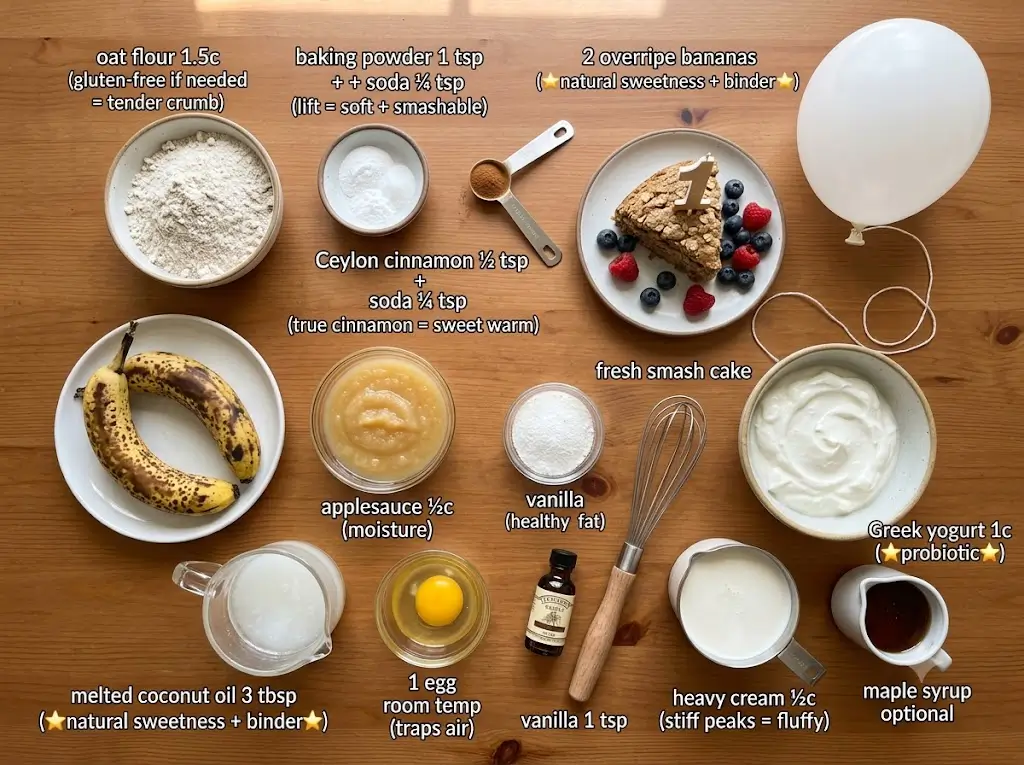
Creating a baby-approved sponge requires moving away from empty carbohydrates and embracing ingredients rich in complex starches, natural fruit sugars, and healthy fats. Here is what you will need for the cake layers and the velvety, gut-friendly frosting:
The Dry Base:
- 1 ½ cups Oat Flour: Choose certified gluten-free oat flour if your little one has sensitivities. It provides a slightly nutty, comforting flavor and a tender crumb that dissolves easily in a baby’s mouth.
- 1 tsp Baking Powder & ¼ tsp Baking Soda: These leavening agents work together to lift the dense fruit purees, keeping the cake soft and smashable.
- ½ tsp Ceylon Cinnamon: Known as “true cinnamon,” Ceylon offers a sweet, warm, aromatic note without the sharp bite of standard cassia cinnamon.
The Wet Binders & Sweeteners:
- 2 Medium Overripe Bananas (mashed): Look for speckled, heavily browned bananas bursting with natural fructose. They act as both the primary sweetener and the binding structure.
- ½ cup Unsweetened Organic Applesauce: This adds luxurious moisture to the oat flour without requiring heavy oils.
- 3 tbsp Melted Coconut Oil: A gentle, healthy fat that provides soft structural integrity to the baked sponge.
- 1 Large Egg (at room temperature): Essential for trapping air and giving the cake enough bounce to survive being stacked.
- 1 tsp Pure Vanilla Extract: Adds a rich, classic bakery aroma.
The Baby-Safe Frosting:
- 1 cup Plain Full-Fat Greek Yogurt: Strained yogurt provides a thick, tangy canvas rich in protein and probiotics.
- ½ cup Heavy Whipping Cream: Whipped to stiff peaks, this cuts the tartness of the yogurt and creates a fluffy, cloud-like texture.
- 1 tbsp Pure Maple Syrup (Optional): Just a drop to round out the flavor profile.
Pro Tip on Flavor Dynamics: When developing recipes for developing palates, relying on aromatic spices and natural fruit esters is key. You can explore the fascinating culinary science behind how bananas, oats, and warm spices interact by checking outThe Flavor Alchemist: A Guide to Creative Cake Pairings.
Substitutions:
- Egg-Free / Vegan: Swap the large egg for ¼ cup of unsweetened plain dairy-free yogurt or a standard flax egg (1 tablespoon ground flaxseed whisked with 3 tablespoons warm water).
- Dairy-Free Frosting: Swap the Greek yogurt and whipping cream for 1 ½ cups of chilled, solid coconut cream scooped straight from the top of canned coconut milk, whipped until light and airy.
Equipment to Baking This Recipe
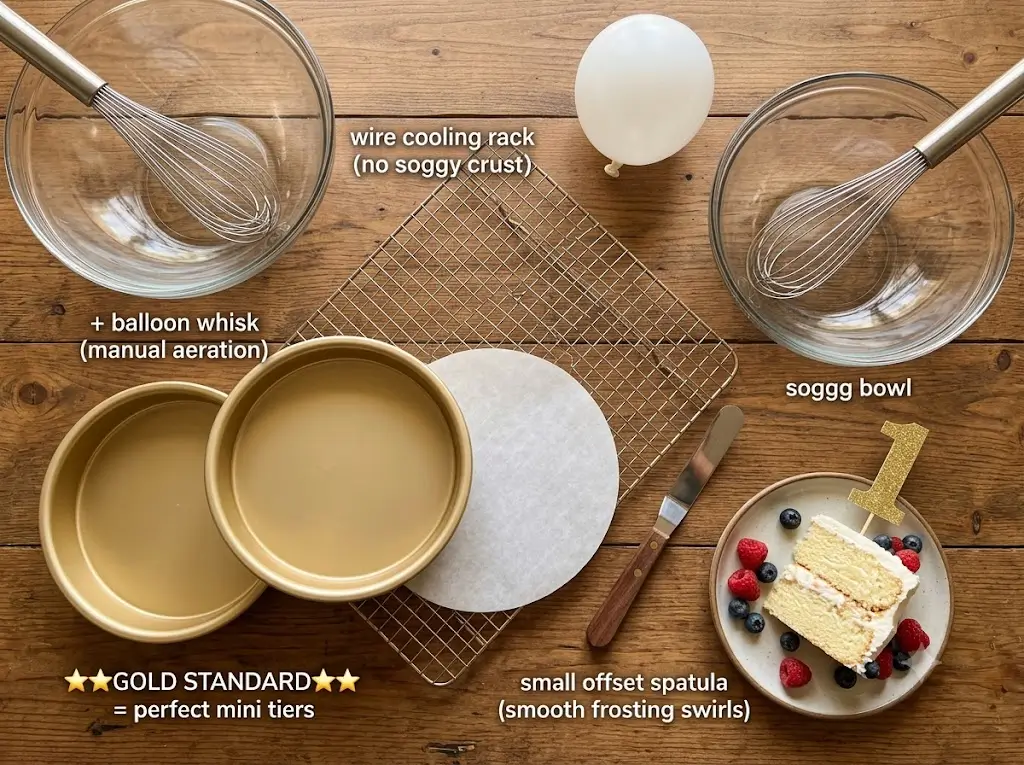
To achieve those towering, perfectly proportioned mini tiers that look incredible in professional photography, you need the right hardware. Standard 8-inch or 9-inch pans will result in a flat, oversized pancake that overwhelms a sitting infant.
- Two 4-Inch Round Cake Pans: The absolute gold standard for smash cakes. They create high, adorable layers that fit perfectly between a one-year-old’s knees.
- Parchment Paper Rounds: Essential for lining the bottom of your pans so the delicate oat sponge releases without tearing.
- Wire Cooling Rack: Elevates the cakes so steam can escape from the bottom, preventing a soggy crust.
- Small Offset Spatula: The ultimate decorator’s companion for achieving smooth, swooshy frosting swirls on miniature surfaces.
- Large Glass Mixing Bowls & Balloon Whisk: For effortless manual aeration of your wet ingredients.
If you are looking to upgrade your kitchen gear or want to ensure your baking arsenal is stocked like a professional pastry chef’s, take a moment to review The Modern Baker’s Essential Toolbox: 7 Best Tips.
Timing Your Smash Cake Bake
When preparing for a first birthday party, time is your most precious commodity. Thankfully, this small-scale recipe moves rapidly from the mixing bowl to the display stand.
- Preparation Time: 15 minutes
- Baking Time: 25 minutes
- Cooling & Decorating Time: 50 minutes
- Total Time: 90 minutes
Data Insight: At exactly 90 minutes from start to finish, this streamlined recipe requires 20% less time than the average standard celebration cake, allowing busy parents to fit the bake seamlessly into a toddler’s morning nap window. Because you are working with reduced batter volumes and quick-cooling mini pans, the physics of this bake mirror the highly efficient methods detailed in Small-Batch Baking: The Cakes for Two Handbook.
Step-by-Step Instructions
Step 1: Prep Your Pans and Oven
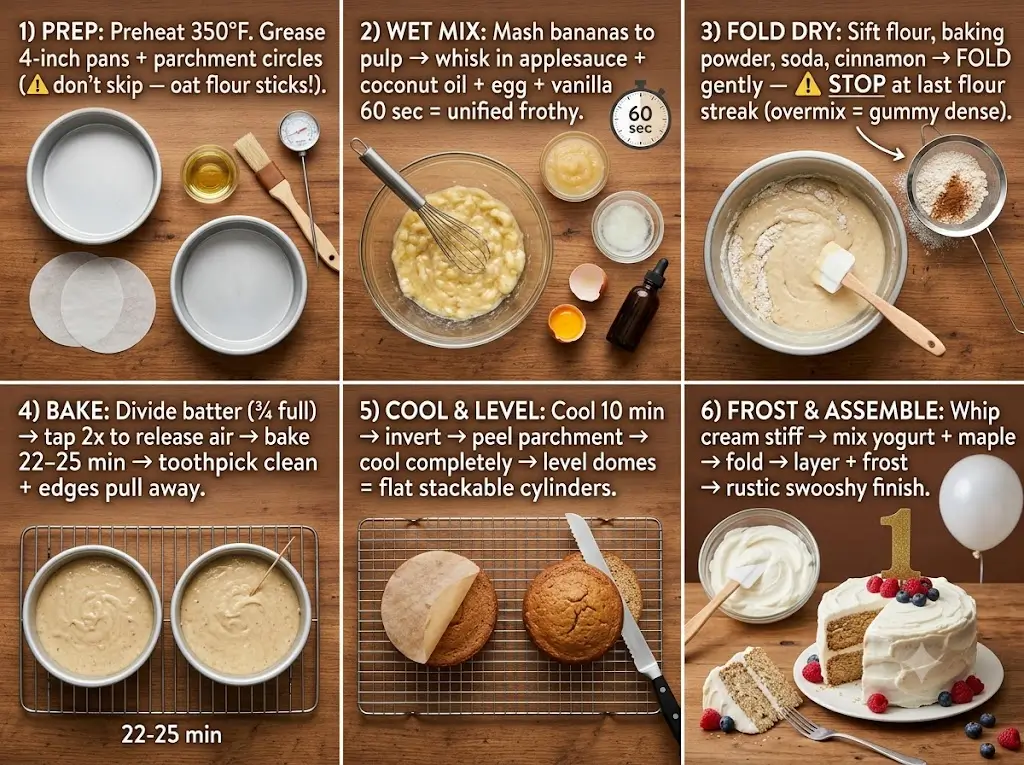
Preheat your oven to 350°F (175°C). Lightly grease the interior walls of your two 4-inch round cake pans with coconut oil, then drop a custom-cut parchment paper circle into the bottom of each. Do not skip the parchment; oat flour lacks the strong gluten network of white flour and is much more prone to sticking.
Step 2: Whisk the Wet Ingredients
In a large mixing bowl, thoroughly mash your overripe bananas with the back of a fork until no large lumps remain—you want a fluid, pulpy consistency. Pour in the unsweetened applesauce, melted coconut oil, room-temperature egg, and pure vanilla extract. Whisk vigorously for 60 seconds until the mixture is completely unified and slightly frothy on top.
Step 3: Combine and Fold
In a separate bowl, sift together your oat flour, baking powder, baking soda, and Ceylon cinnamon. Gently tip the dry ingredients into the wet banana mixture. Using a rubber spatula, fold the batter together using a gentle “over-and-under” motion. Stop mixing the exact moment the dry flour streaks disappear. Overmixing oat batter will result in a gummy, dense texture that is tough for a baby to break apart. If you want to brush up on perfect folding and batter aeration techniques, refer to Master the Cake: 100 Recipes From Simple to Showstopping.
Step 4: Bake the Mini Tiers
Divide the batter evenly between your two prepared 4-inch pans, filling them roughly three-quarters of the way to the top. Tap the pans gently on your kitchen counter twice to pop any trapped air bubbles. Place them on the center rack of your oven and bake for 22 to 25 minutes. The cakes are done when the edges pull slightly away from the pan and a wooden toothpick inserted into the dead center emerges completely clean.
Step 5: Cool and Level
Remove the pans from the oven and let them sit undisturbed on a wire rack for 10 minutes. Gently run a butter knife around the edges, invert the cakes onto the rack, peel off the parchment paper, and let them cool completely to room temperature. Once cool, use a serrated bread knife to gently shave off the slightly rounded dome on top of each layer, creating two perfectly flat, stackable cylinders. For visual guides on achieving flawless structural symmetry, consult Mastering the Art of Traditional Layer Cakes.
Step 6: Whip the Frosting and Assemble
While the cakes cool, pour your cold heavy whipping cream into a chilled metal bowl and whip at high speed until stiff peaks form. In another bowl, stir the Greek yogurt and maple syrup together until smooth. Gently fold the whipped cream into the yogurt until you have a thick, luxurious, spreadable mousse. Place your first cake layer on a small cake stand, spread a generous ½-inch layer of frosting over the top, and place the second layer upside-down on top (so the flat bottom faces up). Use your offset spatula to apply a rustic, swooshy coat of frosting around the exterior.
Nutritional Information
Traditional bakery smash cakes are essentially delivery vehicles for refined white sugar and hydrogenated vegetable shortenings. This recipe flips the nutritional script entirely.
By relying on natural fruit purees and whole-grain oats, you provide your baby with sustained energy, complex B-vitamins, and essential dietary fiber to keep their digestive tract moving smoothly during a highly stimulating day.
| Nutritional Metric | Standard Bakery Smash Cake (Per Slice) | Our Wholesome Smash Cake (Per Slice) |
| Calories | 380 kcal | 165 kcal |
| Total Fat | 18g (mostly saturated/trans fats) | 8g (healthy medium-chain triglycerides) |
| Added Sugar | 42g | 1g (from optional maple syrup) |
| Dietary Fiber | 0.5g | 3.5g |
| Protein | 2g | 6g |
Data Insight: Switching to this homemade alternative reduces your child’s immediate glycemic load by an astonishing 68%, completely preventing the frantic post-cake sugar rush and subsequent behavioral crash that commonly ruins first birthday afternoon routines.
Healthier Alternatives for the Recipe
Every baby develops at their own pace, and dietary restrictions or allergies are exceptionally common around the one-year mark. This recipe is fundamentally versatile and can be tweaked to meet any pediatric dietary requirement:
- The Allergen-Free Bind: If your child is allergic to both eggs and dairy, utilize the flax egg substitute mentioned in the ingredients list and swap the yogurt frosting for a gentle puree of steamed Japanese sweet potatoes whipped with a splash of breastmilk or infant formula. It creates a vibrant, naturally sweet, thick orange frosting that is 100% allergen-free.
- The Iron-Boosting Swap: To naturally increase the bioavailable iron in this celebration meal, stir 1 tablespoon of raw, unsweetened blackstrap molasses into the wet batter. It deepens the color of the cake to a rich gingerbread hue and provides a massive dose of iron, calcium, and magnesium.
- The Grain-Free Option: For families strictly following a paleo or grain-free diet, substitute the 1 ½ cups of oat flour with 1 ¾ cups of finely blanched almond flour mixed with 2 tablespoons of coconut flour.
Serving Suggestions
Presentation is everything when the camera shutters are clicking. To make your smash cake look visually stunning without resorting to artificial food dyes that stain your baby’s skin (and your living room rug) for days, look toward nature’s palette.
Natural Color Additions for Frosting:
- For Dusty Pink: Fold 1 tablespoon of pulverized, freeze-dried strawberry or raspberry powder into the yogurt frosting.
- For Soft Lilac: Blend in 1 teaspoon of wild blueberry juice or pure acai powder.
- For Muted Sage Green: Add a tiny pinch of ceremonial-grade matcha or spirulina powder.
The Photoshoot Setup:
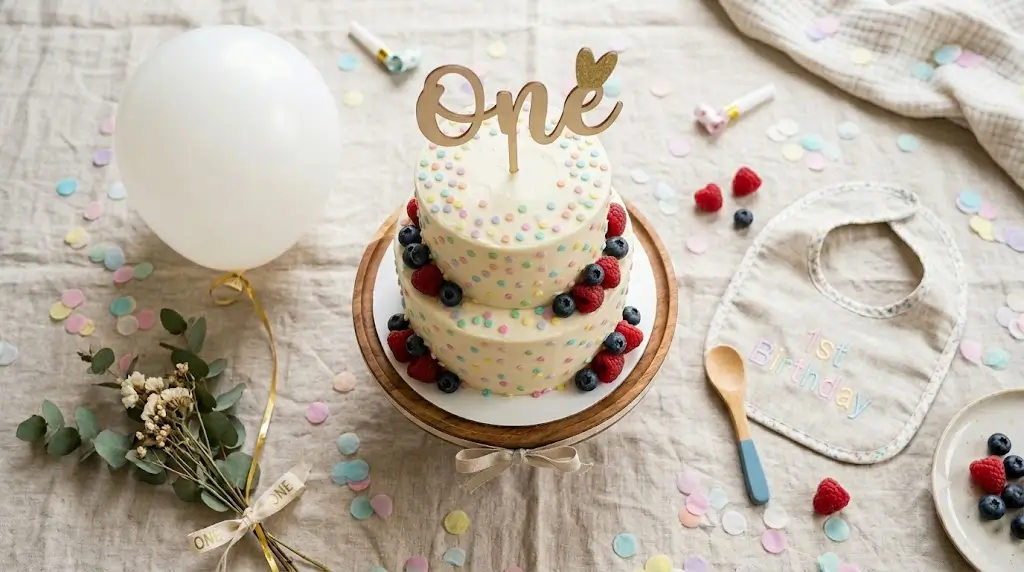
Serve the cake at absolute room temperature. Cold cakes straight from the refrigerator have hardened coconut oil and firm frosting, making them feel like a solid brick to a baby’s gentle touch. A room-temperature cake yields instantly, encouraging your little one to dig their fingers in and make a delightful mess. Top the cake with a single fresh raspberry or a simple, rustic wooden “One” topper.
For inspiration on styling clean, contemporary milestone backdrops that let the cake shine, check out Modern Design: The 2025 Cake Trend Report. If you want to tie your fresh fruit garnishes directly to the exact harvest season of your baby’s birth month, explore The Year-Round Seasonal Cake Calendar.
Common Mistakes to Avoid
Even seasoned home bakers can hit a roadblock when transitioning from traditional adult baking to infant-optimized recipes. Keep these four critical failure points in mind:
- Serving the Cake Ice-Cold: As mentioned above, this is the number one reason baby photoshoots fail. If the sponge and frosting are cold, the baby will poke it once, feel a hard, unyielding surface, get frustrated, and start crying. Always let the cake sit on the counter for an hour before the smash begins.
- Skipping the Crumb Coat: Oat flour creates a looser, more delicate crumb than wheat flour. If you try to apply your final layer of yogurt frosting in one go, you will end up pulling brown crumbs into your pristine white frosting. Apply a paper-thin layer of frosting first, chill the cake for 15 minutes to lock the crumbs down, then apply your final decorative swirls.
- Using Traditional American Buttercream: Standard buttercream is made by beating powdered sugar into solid butter. It is intensely heavy, overly greasy, and far too rich for an infant’s liver and gallbladder to process in large quantities, leading to immediate gastrointestinal distress. If you personally love vintage, heavy buttercreams, bake a separate cake for the adult guests to enjoy, using the classic techniques found in The Ultimate Guide to Heirloom Retro Cakes.
- Over-Baking the Sponge: Because there is no refined white sugar to melt and create a syrupy interior moisture barrier, oat cakes dry out rapidly if left in the oven even 3 minutes too long. Check your bake at the 20-minute mark to be safe.
Storing Tips for the Recipe
First birthday parties are chaotic to organize, so making your cake layers in advance is a brilliantly strategic move.
Freezing the Sponges:
You can bake the oat sponge layers up to 30 days before the party. Let them cool entirely to room temperature, wrap each layer individually in a double tight layer of plastic wrap, slip them into a heavy-duty freezer bag, and store them in the freezer. Thaw them overnight on the kitchen counter the day before the party. Freezing cake layers actually tightens the crumb structure, making them far easier to frost without crumbling—a classic professional workflow strategy highlighted in The Definitive Holiday Showstopper Guide.
Storing the Frosting & Leftovers:
The Greek yogurt and whipped cream frosting cannot be frozen, as the dairy emulsions will shatter and separate upon thawing. Whip the frosting fresh the morning of the event. If your toddler doesn’t completely decimate the cake during the photoshoot, you can slice up the un-smashed portions and store them in an airtight container in the refrigerator for up to 3 days. They make a fantastic, nutrient-dense breakfast treat alongside a scrambled egg!
Conclusion
This wholesome smash cake delivers the ultimate first birthday experience by trading refined sugars and artificial dyes for naturally sweet bananas, gentle oat flour, and rich yogurt frosting. It is a visually stunning, safe dessert that guarantees beautiful milestone photographs and happy, healthy celebration memories for your whole family today.
Are you ready to bake this milestone treat? Try the recipe below and watch your little one light up with joy! Please share your feedback in the review section or leave a comment in our blog to let us know how your photoshoot turned out. Don’t forget to subscribe for more weekly baking updates and baby-friendly recipes!
smash cake recipe: 7 best tips for baby first birthday
Ingredients
Equipment
Method
Step 1: Prep Your Pans and Oven
Preheat your oven to 350°F (175°C). Lightly grease the interior walls of your two 4-inch round cake pans with coconut oil, then drop a custom-cut parchment paper circle into the bottom of each. Do not skip the parchment; oat flour lacks the strong gluten network of white flour and is much more prone to sticking.Step 2: Whisk the Wet Ingredients
In a large mixing bowl, thoroughly mash your overripe bananas with the back of a fork until no large lumps remain—you want a fluid, pulpy consistency. Pour in the unsweetened applesauce, melted coconut oil, room-temperature egg, and pure vanilla extract. Whisk vigorously for 60 seconds until the mixture is completely unified and slightly frothy on top.Step 3: Combine and Fold
In a separate bowl, sift together your oat flour, baking powder, baking soda, and Ceylon cinnamon. Gently tip the dry ingredients into the wet banana mixture. Using a rubber spatula, fold the batter together using a gentle "over-and-under" motion. Stop mixing the exact moment the dry flour streaks disappear. Overmixing oat batter will result in a gummy, dense texture that is tough for a baby to break apart. If you want to brush up on perfect folding and batter aeration techniques, refer to Master the Cake: 100 Recipes From Simple to Showstopping.Step 4: Bake the Mini Tiers
Divide the batter evenly between your two prepared 4-inch pans, filling them roughly three-quarters of the way to the top. Tap the pans gently on your kitchen counter twice to pop any trapped air bubbles. Place them on the center rack of your oven and bake for 22 to 25 minutes. The cakes are done when the edges pull slightly away from the pan and a wooden toothpick inserted into the dead center emerges completely clean.Step 5: Cool and Level
Remove the pans from the oven and let them sit undisturbed on a wire rack for 10 minutes. Gently run a butter knife around the edges, invert the cakes onto the rack, peel off the parchment paper, and let them cool completely to room temperature. Once cool, use a serrated bread knife to gently shave off the slightly rounded dome on top of each layer, creating two perfectly flat, stackable cylinders. For visual guides on achieving flawless structural symmetry, consult Mastering the Art of Traditional Layer Cakes.Step 6: Whip the Frosting and Assemble
While the cakes cool, pour your cold heavy whipping cream into a chilled metal bowl and whip at high speed until stiff peaks form. In another bowl, stir the Greek yogurt and maple syrup together until smooth. Gently fold the whipped cream into the yogurt until you have a thick, luxurious, spreadable mousse. Place your first cake layer on a small cake stand, spread a generous ½-inch layer of frosting over the top, and place the second layer upside-down on top (so the flat bottom faces up). Use your offset spatula to apply a rustic, swooshy coat of frosting around the exterior.